


A Rolex conversation works best as a shared decision, not a case to win. Knowing how to talk to your spouse about buying a Rolex starts with explaining what draws you to the watch and listening carefully to your partner’s concerns about cost and timing. Agree on the trade-offs before either of you feels pressured to decide.
A considered purchase can still carry real financial and emotional weight. It’s reasonable to want a meaningful timepiece, just as it’s reasonable for your spouse to ask how it fits with other priorities. The goal isn’t to persuade at any cost, but to reach a decision you can both feel comfortable with.
This article offers a practical way to share your preferences, discuss the budget, weigh other goals, and choose a suitable time to revisit the decision. You’ll also learn how to assess financial readiness together, keeping the conversation open, respectful, and grounded in what matters to both of you.
Key Takeaways
- Explain what appeals to you about the watch, while making space for your spouse’s questions and perspective.
- Discuss cost in the context of your shared financial priorities, not as a decision to justify after the fact.
- Compare the purchase with other goals that matter to both of you, and agree on any trade-offs together.
- Choose a time to revisit the decision without relying on guilt, surprise spending, or repeated pressure.
- Use your household finances to decide whether the purchase feels comfortable before taking steps toward buying.
1. Choosing and communicating genuine watch preferences
Begin with why this particular watch matters to you. Is it the design, the movement, the history, or the way it marks a personal milestone? Naming the appeal gives your spouse something more useful than a brand name alone. For example, explain that you admire the dial’s legibility or the case proportions. Don’t present personal taste as proof that the purchase is necessary. A considered preference can be meaningful without becoming an argument.
Be just as candid about what you don’t know. If you’re new to watches, say so, then prepare questions about the model, condition, and purchase process. You don’t need to perform expertise to make a sound choice. Share what you’ve learned and distinguish confirmed details from assumptions. If a watch doesn’t suit your taste, politely decline it rather than accepting it to seem agreeable. That honesty helps your spouse understand your intentions and keeps the decision focused on the watch you genuinely want.
Make the conversation specific. Describe the features you value, then invite your spouse to share any reservations. You might say, “I’m drawn to this Rolex for its restrained design, but I want us to review the decision together.” This approach to how to talk to your spouse about buying a Rolex expresses enthusiasm without creating pressure. It also lets both of you distinguish the appeal of owning a watch from the appeal of a particular model.
Consider whether another watch should leave the collection first. A one-in, one-out approach means selling a watch you no longer wear to help fund a new purchase. Ask which watches you wear, which you admire, and whether one has become redundant. Treat a sale as a deliberate collection choice, not an automatic source of funds or a reason to rush.
Research the watch and the seller together. Write down the model details you care about, the questions you still have, and the qualities you value in a seller. If visiting an authorized dealer, introduce yourselves, explain your preferences, and ask questions openly. Work consistently with one salesperson where practical, and check in occasionally rather than repeatedly. Don’t make resale value the centerpiece or buy unwanted items to build purchase history. Shared research makes it easier to compare a watch with your actual preferences and decline an option that doesn’t fit.
2. Responding to concerns about cost
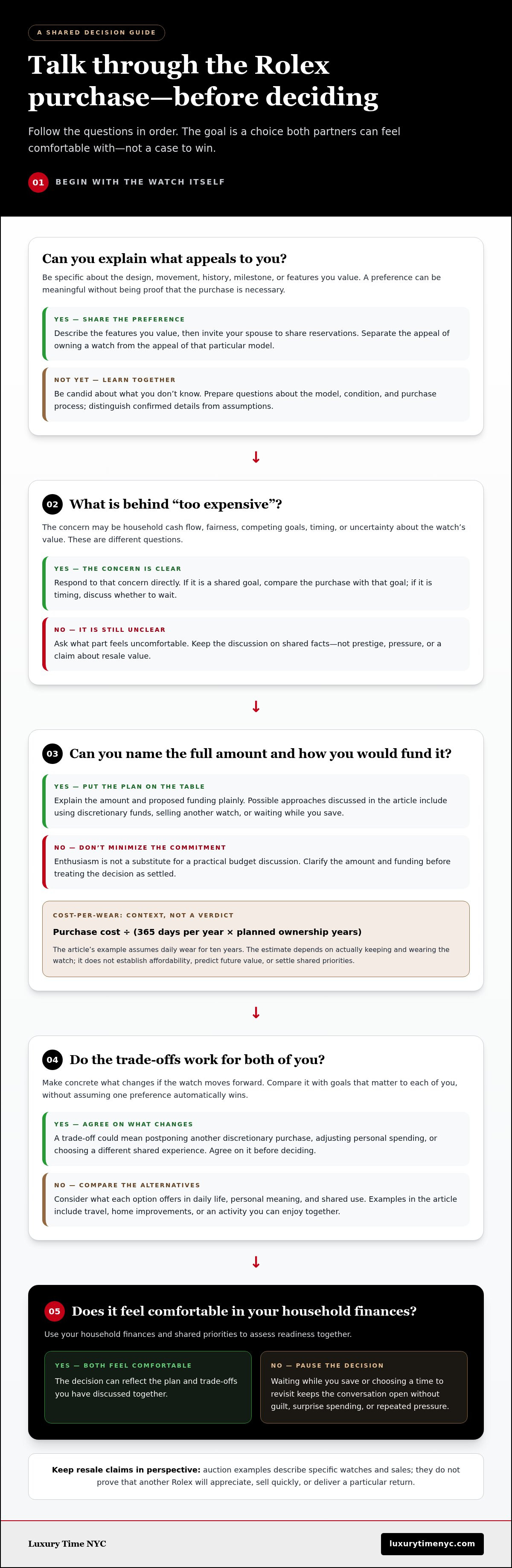
Start by identifying what your spouse means by “too expensive.” The concern may be household cash flow, fairness, competing goals, or uncertainty about the watch’s value. These are different questions, so respond to the concern your partner is actually raising. Share the full amount you’re considering and explain how you would fund it. Don’t minimize the commitment or substitute enthusiasm for a practical discussion.
A cost-per-wear estimate can add perspective, provided you treat it as a planning tool. If you expect to wear the watch daily for ten years, divide its purchase cost by 365 days per year and the planned ownership years. The result depends on actually keeping and wearing it. It doesn’t establish that the purchase is affordable, predict what the watch will be worth later, or settle whether it fits your shared priorities.
Market information can add context, but it can’t determine what feels comfortable for your household. Compare the watch you’re considering with current market information, then separate that context from your budget and intended use. Rolex Daytona Paul Newman auction sales may illustrate collector interest in a historic reference. They don’t prove that another Rolex will appreciate, sell quickly, or deliver a particular return. Don’t make investment potential the centerpiece of your case.
Make room for specific questions. Ask whether your spouse is most concerned about the amount, the timing, or what the money would otherwise support. Then respond with relevant details: whether you’d use existing discretionary funds, sell another watch, or wait while you save. If the concern is a shared goal, for instance, compare the purchase with that goal directly. Don’t answer a budget objection with a claim about prestige or resale value.
Keep the discussion focused on shared facts, not on winning. You might say, “Here’s the amount I’m considering, and here’s how I propose to fund it. What part feels uncomfortable to you?” This approach to how to talk to your spouse about buying a Rolex leaves room for an honest answer. If resale comes up, explain that auction examples describe specific watches and sales, not a dependable outcome for your purchase. A sound conversation weighs personal enjoyment, affordability, and uncertainty together.
3. Agreeing on trade-offs before making a decision
A useful trade-off spells out what changes if the Rolex purchase moves forward. It might mean postponing another discretionary purchase, adjusting personal spending, or choosing a different shared experience. Discuss those alternatives together before treating the watch as the obvious priority. The aim is a choice both partners can explain, not a concession one partner resents.
Start by naming goals that matter to each of you. One partner may value a watch, while the other prefers travel, home improvements, or an activity you can enjoy together. Compare what each option offers in daily life, personal meaning, and shared use. A Rolex may be a personal pleasure; another goal may benefit both partners. Neither preference needs to be dismissed for the comparison to be fair.
The example illustrates a trade-off, not a universal recommendation. Ask whether a shared alternative genuinely appeals to both of you. If it does, compare it openly with the watch. If it doesn’t, don’t use the example to suggest that one partner’s preference should automatically prevail.
Make the options concrete. You might agree to pursue the watch while delaying a separate discretionary purchase, or pause the watch decision until you’ve discussed a shared goal. Spell out what each option would change and who would benefit. Then ask each partner to name an outcome they could accept without feeling pressured. A clear alternative gives the conversation direction, even if you don’t choose either option immediately.
Keep the agreement specific and proportionate. Avoid vague promises such as “we’ll make it up later,” which leave the trade-off undefined. Instead, name the goal being deferred, why you’ve chosen to defer it, and when you’ll revisit the decision. Both partners should be able to describe the same agreement in their own words. If your priorities still differ, acknowledge that in the discussion rather than disguising disagreement as consent.
Before deciding, ask whether the proposed exchange feels fair to both of you. A watch purchase shouldn’t quietly displace a commitment your household values more. Likewise, a shared alternative shouldn’t become a way to dismiss an individual interest. Compare the choices, clarify the consequences, and agree on the next conversation together. This process turns a personal wish into a deliberate household decision.
4. Assessing timing and mutual comfort
Timing should reflect your household’s circumstances, not urgency driven by desire. Before discussing a purchase date, consider upcoming commitments such as a move, travel plans, or a major household expense. If either partner feels unsettled about those priorities, pause the watch decision and agree when to revisit it. A clear pause is different from an indefinite refusal. It gives both of you room to consider the purchase without pressure.
A special occasion can provide meaningful context, but it shouldn’t become leverage. An anniversary, engagement, graduation, or push present may make a watch especially significant. Discuss whether the occasion genuinely suits the purchase or whether it’s being used to rush agreement. For example, an anniversary can prompt a conversation about a shared gift while leaving both partners free to say the timing doesn’t feel right.
Agree on how you’ll make the decision before a specific watch becomes available. Decide together whether you’ll revisit the conversation after reviewing household priorities or wait until a planned milestone. This helps avoid an improvised choice in an emotionally charged moment. If one partner needs time, set a mutually acceptable time to talk again. The goal is to make room for a thoughtful answer, not to use a deadline as pressure.
Keep guilt, surprise spending, and repeated requests out of the discussion. Buying a Rolex without your partner’s approval can damage trust beyond the purchase itself. A surprise may feel romantic to one person, yet carry financial consequences for both. Instead, explain your preferred timing and ask what would help your spouse feel comfortable discussing it. Accept the answer without repeatedly making the request.
Mutual comfort means both partners can describe the decision honestly. One might be excited about the watch, while the other needs more time or prefers to wait for a particular occasion. State those positions plainly. For example, agree that an anniversary is a suitable time to reconsider without treating that agreement as automatic approval to buy. A milestone can anchor the discussion, but it can’t replace consent.
Before moving forward, summarize what you’ve agreed on: why the timing matters, what concerns remain, and when you’ll talk again. If your spouse says the present moment feels wrong, respect that answer instead of turning the next conversation into another sales pitch. If both of you are comfortable continuing, proceed at a pace that preserves trust. A considered decision should feel shared, whether it leads to a purchase now or later.
5. Being financially ready to purchase
Set a luxury watch budget by reviewing household income, committed expenses, savings goals, and available discretionary funds together. Choose a spending limit that leaves those commitments intact, and don’t rely on borrowing or hoped-for resale proceeds to make the purchase fit.
A Rolex should fit around shared financial goals and debt repayment, not displace them. Agree which priorities come first, then consider the watch only if funds remain after planned household obligations.
Use real financial information to guide the conversation. Review your current budget, upcoming expenses, savings plans, and any outstanding debt. The point isn’t to share every account detail as a test of trust. It’s to understand whether the purchase fits without weakening priorities you’ve already chosen together.
Make the budget practical. Agree on the maximum amount you’re willing to spend, where the funds will come from, and which household commitments must remain protected. If the money would come from discretionary savings, decide whether using it affects another goal. If the purchase would mean carrying debt or delaying a repayment plan, pause and discuss that consequence before considering a specific watch.
For example, compare your plan with the priorities already in your household budget. If you’re saving for a home renovation, decide whether that contribution will stay unchanged. If you’re paying down a balance, agree whether repayment will continue at its planned pace. These examples turn “Can we afford it?” into a concrete discussion about what the purchase changes and what it leaves untouched.
Separate readiness from availability. A watch that catches your interest can make a decision feel urgent, but you should register interest only when you’re realistically prepared to complete the purchase. First agree on the budget, funding source, and timing. Then confirm that both partners are comfortable with those terms before taking the next step. This keeps the decision grounded in your finances rather than anticipation.
Use a shared checklist to wrap up the discussion: the spending limit, protected goals, debt repayment plan, and agreed source of funds. Each partner should be able to explain the same plan. If an answer remains unsettled, identify what still needs a decision and return to it together. You’re financially ready for a luxury purchase when its cost fits your plan without quietly changing other commitments.
Luxury Time NYC: Rolex Watches
Luxury Time NYC offers Rolex watches for couples ready to move from discussion to considering a timepiece. Once you’ve agreed on your preferences, budget, and timing, exploring a watch together can make the next step more informed. Focus on the details that matter to both of you, including the design, condition, and how the watch fits the wearer’s intended use. A shared visit or review of the available Rolex watches can help turn your research into a clear choice, without changing the financial boundaries you set together. Luxury Time NYC also offers Patek Philippe, Audemars Piguet, and Richard Mille watches for those comparing prestigious watchmakers. When you’re ready to explore Rolex watches, visit Luxury Time NYC.
Let a Shared Decision Guide Your Next Step
A watch chosen with mutual understanding can mean more than its mechanics. Let the conversation shape your next step, whether that means taking time to reflect or exploring a particular piece together. A thoughtful approach to how to talk to your spouse about buying a Rolex keeps the decision connected to both partners’ priorities.
When you’re ready to consider specific timepieces, Luxury Time NYC offers Rolex watches, as well as Patek Philippe and Audemars Piguet watches. Explore these brands with your shared preferences in mind, and let your agreed budget and timing guide you.
Contact Luxury Time NYC to continue your search. A considered choice begins with an open conversation, and you can take the next step together.
Frequently Asked Questions
How can you discuss trade-offs without creating pressure?
Present alternatives as genuine choices, not consequences your spouse must accept for you to get the watch. For example, compare buying it now with waiting, choosing another discretionary goal, or deciding not to proceed. Explain what each option would mean to you, then invite your spouse to share their priorities. A trade-off is collaborative when either person can decline an option without blame or repeated persuasion.
How can you make the conversation feel collaborative?
Give both partners a defined role in shaping the decision. One person might describe what appeals about the watch; the other might identify household considerations or questions to resolve. Then switch roles and make room for each person’s concerns. A useful prompt is, “What would you want us to understand before deciding?” This makes the discussion joint problem-solving, rather than a presentation followed by a request for approval.
How can you move forward without rushing the decision?
Separate learning about a watch from committing to buy it. Gather model details, note unanswered questions, then step away before deciding. Each partner can consider the proposal privately and return with their view instead of responding in the moment. If new information changes the choice, discuss it together. A considered pace helps prevent excitement, availability, or an occasion from driving a premature decision.
How do I talk to my spouse about an expensive purchase?
Start by explaining clearly why the purchase matters to you, without suggesting your reason obligates your spouse to agree. For example, say you value the design or want a lasting reminder of a personal achievement. Then ask what concerns the purchase raises for them. Listen to the full answer before suggesting solutions, so you address their actual concern rather than an assumption.
Should I buy a luxury watch if my spouse disagrees?
If the purchase would use shared funds or affect shared commitments, don’t proceed while your spouse’s objection remains unresolved. A personal purchase should still respect the financial arrangements you’ve made together. If you have agreed-upon individual spending funds, clarify whether the purchase fits those boundaries and affects shared plans. The central issue isn’t simply who owns the watch, but whether the decision honors the expectations you’ve established together.
What if your spouse says the watch is too expensive?
Ask what feels unaffordable: the overall commitment, the timing, or the particular watch. Each answer points to a different next step. Your spouse may be comfortable revisiting the idea later but not with the current timing, or may prefer another option. Don’t counter their concern with a resale argument. First understand what “too expensive” means in your shared circumstances, then decide whether to pause or reconsider.
How should couples discuss a large discretionary purchase?
Agree on a consistent way to raise major personal purchases before a specific item feels urgent. For instance, decide what information each person wants to review and how you’ll handle questions that need more thought. Use the same approach for other significant discretionary choices, not just watches. A shared process reduces the chance that one partner feels singled out and helps both of you understand how individual interests fit household expectations.
What are respectful ways to handle disagreement about buying an expensive watch?
Acknowledge your spouse’s concern before responding: “I hear that this purchase feels out of step with our priorities.” Then explain your perspective without dismissing theirs. If you reach an impasse, pause the discussion rather than escalating it with ultimatums, guilt, or surprise spending. Return to the subject after each of you has considered the other’s view. Respectful disagreement preserves trust, even when you don’t reach the same conclusion.


