


An Audemars Piguet Royal Oak’s market value depends on its reference, condition, materials and provenance, not just the collection name. Prices vary widely, from time-only steel models to rare watches with complex complications. Two watches in the same collection can therefore have substantially different values.
Rarity and desirability matter to collectors, but so do the details that establish a watch’s history and condition. A sound estimate considers those details alongside current market activity, rather than using the collection name as a shortcut for value.
This guide explains how Royal Oak prices vary, what influences resale value, and what auction results and ownership records can reveal. It also compares the Royal Oak with the Rolex Daytona and Patek Philippe Nautilus to help you assess its place among leading luxury sports watches.
Key Takeaways
- Compare a Royal Oak’s retail price with its secondary-market value by reference and configuration, rather than relying on a collection-wide average.
- Assess condition, original finishing, box, papers and service history together; these details can materially affect resale appeal.
- Use auction results as evidence of demand, while distinguishing exceptional vintage or rare examples from typical market transactions.
- Compare the Royal Oak with the Rolex Daytona and Patek Philippe Nautilus by examining each watch’s reference, materials, rarity and market position.
- Understand why steel, precious-metal and complicated models occupy different price points before evaluating a specific watch.
What are the Audemars Piguet Royal Oak Price Points?
Royal Oak prices range from time-only steel references to precious-metal watches with complex complications. An Audemars Piguet Royal Oak’s market value depends on its exact reference, condition, configuration and current demand.
Retail and Secondary-Market Pricing
Retail pricing reflects a manufacturer’s listed price, while secondary-market pricing reflects pre-owned transactions and current offers. This distinction helps you judge whether a premium reflects demand for a particular reference or simply a seller’s asking price.
Steel models, chronographs and perpetual calendars occupy different price tiers. These examples show why like-for-like comparisons matter: the reference and complication can substantially change a watch’s market position.
For a US estimate, compare the same reference, material and condition across current offers and completed auction results. An asking price reflects a seller’s expectation, not necessarily what a buyer paid.
Materials, Complications, and Price Premiums
Materials and complications set a watch’s price tier, while dial and case choices can distinguish otherwise similar references. A steel, time-only Royal Oak and a gold perpetual calendar appeal to different collector interests.
Steel perpetual calendars can sit in a higher tier than time-only steel models, while gold watches with additional complications can exceed the usual range for standard references. Limited editions and haute horlogerie watches may command more. The movement’s complexity, precious metal and relative scarcity all shape demand.
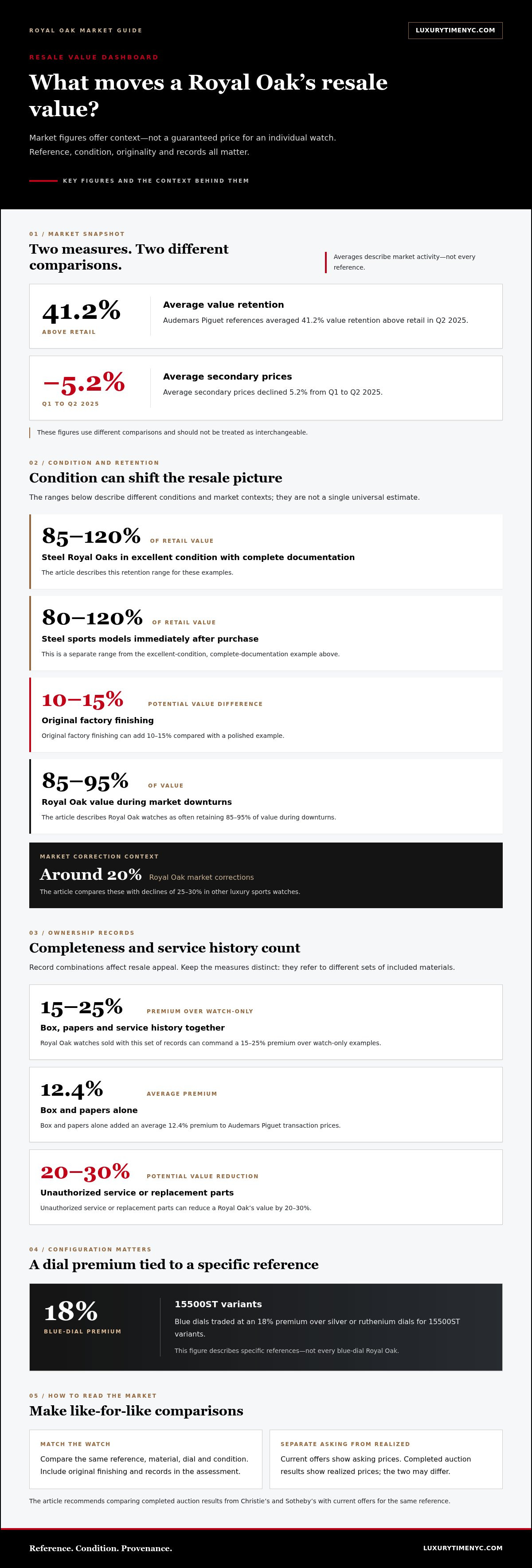
For 15500ST variants, blue dials traded at an 18% premium over silver or ruthenium dials. These figures describe specific references, not every blue-dial Royal Oak.
Popular and Collectible Royal Oak Models
Collectibility often centers on historic references, sought-after configurations and limited production. These details help buyers distinguish models with enduring collector interest from those whose value rests mainly on current attention.
The original 5402ST “Jumbo” is a central vintage reference; A-series examples were the first 1,000 produced. The discontinued 15202ST “Jumbo” also trades above its original retail price, reflecting its place in the line’s history.
Among later references, the 16202ST Jumbo 50th Anniversary and openworked 15407ST attract attention for their distinctive designs. The 37mm 15450ST and 41mm 15400ST offer useful comparisons across case sizes. Reference, condition and documentation remain essential when assessing any example.
Price Trends and Market Checks
Royal Oak prices have not risen steadily over the past five years. For buyers and sellers, this means current value reflects changing demand, not just a watch’s earlier peak.
The broader luxury-watch market cooled after its 2022 peaks, while Royal Oak values remained resilient. Audemars Piguet references averaged 41.2% value retention above retail in Q2 2025, while average secondary prices declined 5.2% from Q1 to Q2 2025. Those measures use different comparisons, so they should not be treated as interchangeable.
In the United States, compare completed auction results from Christie’s and Sotheby’s with current offers for the same reference. Match the material, dial, condition and included records before drawing conclusions. Auction results show realized prices; listings show asking prices, which may differ.
Audemars Piguet secondary-market value retention
Royal Oak resale value reflects condition, originality, documentation and demand for each reference. Retention figures can offer context, but they apply to specific models and market periods.
Condition and Value Retention
Condition affects how closely a Royal Oak’s resale price tracks its retail price. For collectors, the dial, case finishing and bracelet are important factors, not minor cosmetic details.
Steel Royal Oak models in excellent condition with complete documentation typically retain 85-120% of retail value. Steel sports models can retain 80-120% of retail value immediately after purchase. These ranges vary because reference demand and the comparison point matter.
Original factory finishing can add 10-15% to value compared with a polished example. Polishing may soften the crisp edges and surfaces that define the Royal Oak’s case and bracelet. A buyer weighing two similar watches should therefore inspect finishing alongside visible wear.
Market direction also shapes retention. Royal Oak watches often retain 85-95% of value during market downturns. Market corrections of around 20% compare with declines of 25-30% in other luxury sports watches. These figures describe broad trends, not a fixed outcome for every reference.
Resale Factors and Ownership Records
Resale factors include condition, originality, box, papers and service history. Reviewing them together helps buyers understand a watch’s provenance and avoid costly surprises.
Royal Oak watches sold with box, papers and service history can command 15-25% premiums over watch-only examples. Box and papers alone added an average 12.4% premium to Audemars Piguet transaction prices. The figures reflect different record combinations, so they should not be treated as identical measures.
Unauthorized service or replacement parts can reduce a Royal Oak’s value by 20-30%. Buyers should compare the watch’s components and service records with its reference, then examine case condition, bracelet integrity and movement history. A luxury name cannot offset uncertainty about originality.
What factors affect resale value? The reference, condition, original finishing, service history and included records all matter. A complete set can support a premium, while unauthorized work or replacement parts can weigh against the price.
What risks should buyers consider with a pre-owned Royal Oak? Key concerns include uncertain authenticity, non-original components, undisclosed service work and condition that differs from the description. Compare the watch with its documentation before judging the price against similar examples.
For collectors assessing an example’s condition and originality, Audemars Piguet watches provide a relevant point of reference.
Box, papers, and service history premiums
For a Royal Oak, the box, papers and service history provide context about the watch’s ownership and condition. Their effect on resale depends on completeness, originality and how clearly the records correspond to the specific reference. A premium is meaningful only when the watch itself inspires comparable confidence.
What Complete Records Add
Royal Oak watches sold with the box, papers and service history can command 15-25% premiums over watch-only examples. Box and papers alone added an average 12.4% premium to Audemars Piguet watch transaction prices. These are distinct comparisons: one includes service history, while the other measures box and papers.
For buyers, the practical distinction is whether the set is complete or partial. Match the papers to the watch’s reference and serial information, then compare the box and accompanying materials with the stated configuration. A box alone doesn’t establish provenance, and papers don’t prove that every component remains original.
For sellers, records help explain a watch’s history, rather than merely decorate its presentation. Keep service documentation together and describe exactly which items accompany the Royal Oak. If the box or papers are missing, assess the watch on its own merits rather than implying it comes as a complete set.
Service History and Originality
A service record is most useful when it identifies the work performed and the watch it concerns. For a Royal Oak, that context can help buyers understand maintenance and distinguish documented work from unsupported claims. It also clarifies whether service history accompanies the watch or is being inferred from its appearance.
Parts and service choices can affect value sharply. Unauthorized service or replacement parts can reduce an Audemars Piguet Royal Oak’s value by 20-30%. That makes originality a separate consideration from cosmetic condition. A watch that appears clean may still warrant close scrutiny of its components and service records.
Case finishing deserves particular attention. Original factory finishing can add 10-15% to value compared with a polished example. A careful comparison should consider the case and bracelet alongside the paperwork, rather than allowing an impressive box to outweigh visible changes to the watch.
Reading the Premium in Context
Compare complete-set and watch-only examples of the same Royal Oak reference, material and condition. The 15-25% premium for a box, papers and service history is a market comparison, not a fixed adjustment for every watch. Likewise, the 12.4% average for box and papers alone shouldn’t be added mechanically to a retail price.
For a sound resale assessment, ask three questions: are the records present, do they match the watch, and does its physical condition support the stated history? These distinctions help explain why two Royal Oaks with similar materials can attract different premiums, even when their reference and retail price are alike.
Comparisons with Rolex Daytona and Patek Philippe Nautilus
The Royal Oak, Rolex Daytona and Patek Philippe Nautilus are established luxury sports watches, but they occupy distinct collecting positions. A useful comparison starts with each exact reference, condition and transaction type, not brand reputation alone.
Three Different Collector Propositions
Audemars Piguet introduced the Royal Oak in April 1972, bringing a distinctive steel sports-watch design into its luxury collection. The Rolex Daytona is defined by its chronograph identity, while the Patek Philippe Nautilus shares the Royal Oak’s integrated-bracelet sports-watch appeal. Those differences shape what collectors value: design lineage, complication, brand heritage and the specific reference.
The Royal Oak’s appeal often lies in its distinctive architecture and broad range of references, from time-only watches to chronographs and perpetual calendars. The Daytona is most relevant when comparing chronographs, such as the Royal Oak Chronograph. The Nautilus offers a useful comparison when considering integrated-bracelet luxury sports watches.
Neither comparison produces a universal winner. A collector drawn to the Royal Oak’s case and bracelet finishing may prefer it. A Daytona buyer may prioritize the chronograph’s identity, while a Nautilus collector may focus on Patek Philippe’s design language. Personal preference is not the same as resale performance.
How to Compare Market Value Fairly
For a meaningful market comparison, match the watches by material, complication, condition and completeness. Compare a steel Royal Oak with a steel Daytona or Nautilus, rather than comparing a precious-metal perpetual calendar with a time-only model. Account for box, papers and service history consistently, since ownership records can affect observed transactions.
Then distinguish asking prices from completed sales. A high Rolex Daytona listing doesn’t establish its achieved value, just as a Royal Oak auction result doesn’t set the price of every Nautilus. Use the same period and currency, and separate retail from secondary-market transactions. This approach shows whether a premium reflects a specific reference or a broader difference between the watches.
What the Comparison Tells Buyers
Assess the Royal Oak by its reference and configuration, rather than treating it as interchangeable with the Daytona or Nautilus. A chronograph comparison can clarify demand for that complication, while a Nautilus comparison can illuminate competition in the integrated-bracelet category. Each comparison answers a different question.
When deciding what to buy, rank the design, complication and ownership history that matter most to you, then compare like-for-like examples. For resale analysis, focus on completed transactions and the exact reference. The highest price among three listings may reflect rarity or condition, not a lasting lead for one brand.
How much does a new Audemars Piguet Royal Oak cost at retail in the US?
Listed US retail figures vary by Royal Oak reference, material and complication. These figures are reference-level guidance, not a single price for every Royal Oak.
Retail Price Ranges by Configuration
The figures differ because model specifications and reference groupings vary.
These figures provide a useful comparison for that reference, but they shouldn’t be treated as the price of every chronograph configuration.
- Time-only stainless steel reference models: Starting around entry-level luxury thresholds.
- Precious metal and chronograph variants: Mid-tier retail pricing based on gold or platinum composition.
- High-complication and perpetual calendar editions: Premium retail pricing reflecting advanced watchmaking craftsmanship.
Each range describes a different part of the collection. To compare retail figures, match the reference and complication first, then consider case material and edition. A steel, time-only watch is not a direct price comparison for a gold model with additional complications.
Why Complications and Materials Change the Price
A perpetual calendar adds mechanical complexity, placing it above the entry point for simpler Royal Oak models.
These upper tiers show why there is no single representative retail price for the collection. Differences in reference and configuration shape price comparisons, even among steel models.
Using Retail Figures in a Purchase Decision
Retail and secondary-market prices answer different questions. Retail figures describe listed prices; secondary-market figures reflect pre-owned transactions and offers. For a US comparison, match the reference, material and complication, then distinguish a listed offer from a completed sale.
For current reference comparisons, explore Luxury Time NYC and consider how each model’s configuration fits your collecting priorities.
Luxury Time NYC: Rolex Watches
Luxury Time NYC offers Audemars Piguet watches alongside Rolex, Patek Philippe and Richard Mille watches. If you’re weighing a Royal Oak against another established brand, comparing these collections is a natural next step after reviewing references, condition and market evidence.
Consider the specific watch you’re seeking, then compare its defining details with your priorities: design, complication, material and ownership records. A market estimate provides context, while the reference and individual watch bring the decision into focus.
When you’re ready to discuss a timepiece, contact Luxury Time NYC.
Make Your Next Watch Decision With Clarity
Start by defining what you want from ownership. A Royal Oak for daily wear may call for different priorities from one selected for a collection or future resale. Decide which qualities matter most, then let that purpose guide your comparison of individual watches.
Assessing the Audemars Piguet Royal Oak market value is most useful when it supports a considered decision, rather than standing in for one. Your preferred reference, the watch’s history and your expectations for ownership all deserve attention. The right choice is the one whose character and condition align with those priorities.
For a considered conversation about your next timepiece, contact Luxury Time NYC. Take the next step with confidence and choose a watch you’ll value for its own merits.
Frequently Asked Questions
Conclusion: Which Audemars Piguet Models Stand Out Today?
The Royal Oak Jumbo references, openworked models and vintage 5402 remain distinctive choices for different collecting priorities. The 16202ST marks the Jumbo’s 50th anniversary, while the 15407ST showcases an openworked movement. Collectors drawn to early Royal Oak history may prefer the original 5402 family. Compare each watch’s design, condition and documented history; the most compelling choice depends on what you value in ownership.
What Makes the Royal Oak Hold Value Better Than Most Watches?
No single feature ensures stronger value retention across every Royal Oak. The collection combines a recognizable design, established horological heritage and sought-after references. Those qualities can sustain collector interest, while rarity and condition influence demand for individual watches. Treat retention as reference-specific, not an automatic result of the Audemars Piguet name. A watch’s appeal to future buyers also depends on its originality and ownership records.
What Makes the Royal Oak So Valuable?
Its value reflects a combination of design history, fine finishing and mechanical complexity. The first Royal Oak 5402 “Jumbo” had a 39mm case and a 7mm profile, an unusually slim silhouette for a steel sports watch. Early models used Calibre 2121. Later Royal Oak references introduced different sizes and complications, giving collectors distinct designs and movements to consider within the same celebrated line.
Which AP Models Have the Highest Demand?
Demand is strongest around recognizable Royal Oak references, including the Jumbo family, select steel selfwinding models and distinctive complications. The 15450ST had a turnover rate of 14 days from listing to sale, illustrating brisk interest in that reference during the reported period. Demand can shift with condition, dial configuration and market sentiment, so one reference’s activity shouldn’t be treated as a ranking for every Audemars Piguet model.
What Is the Current Market Value of an Audemars Piguet Royal Oak?
The Audemars Piguet Royal Oak market value depends on the exact reference, material, condition, originality and current buyer demand. There is no meaningful single figure for the entire collection: a time-only steel watch and a rare complicated model appeal to different buyers. For a useful assessment, identify the reference and compare watches with similar configurations and conditions, distinguishing completed transactions from asking prices.
What Are Current Resale Prices for Popular Royal Oak Models and References?
Resale values differ by reference and configuration, so a single collection-wide figure can mislead. The 15450ST, 15400ST, 15500ST and Jumbo references each occupy distinct positions in the market. Compare the exact reference, material, dial and condition when reviewing current transactions. For an unusual or vintage watch, provenance and originality are especially important context, as the same broad model family can include materially different examples.
How Do Royal Oak Prices Vary by Reference, Material, Size, and Complication?
Price differences reflect what each watch offers. A 37mm 15450ST, a 41mm 15400ST and a 42mm Royal Oak Offshore represent different case proportions and wearing experiences. Steel, gold and other materials also distinguish configurations. Complications such as a chronograph or perpetual calendar add mechanical functions and place a watch in a different collecting category. Compare like-for-like examples before drawing conclusions.
How Do Royal Oak Market Prices Compare With Retail Prices and Other Luxury Sports Watches?
Retail and resale prices describe different stages of a watch’s market life; resale also responds to availability and collector demand. Comparisons with a Rolex Daytona or Patek Philippe Nautilus are most useful when the watches have similar materials, conditions and complications. There is no universal price ranking among the three. Review exact references and transaction types to understand what a price difference reflects.


