


A high-value watch deserves a sale handled with the same care as its workmanship. The safest way to sell a luxury watch is through a specialist dealer that authenticates the timepiece, explains how it arrives at an offer, and sets out payment terms before the sale proceeds. For a valuable watch, a clear process matters as much as the offer.
It’s reasonable to want a fair valuation and confidence that your watch stays secure throughout the transaction. A professional process should explain each step, from inspection and offer to payment and, if relevant, insured shipping. If you’re considering another timepiece, you can also discuss a trade-in.
This guide covers dealer authentication, the details that can affect an offer, and what to understand about payment and shipping. It also explains how a trade-in can fit into your decision, so you know what to expect before entrusting a specialist with a valuable watch.
Key Takeaways
- Choose a specialist dealer whose authentication process and payment terms are clear before the sale proceeds.
- Have the watch’s box, papers, receipts, and accessories ready; their presence can influence the offer.
- Understand how condition, authenticity findings, and the shipping arrangement shape the quote and handover.
- Compare the clarity and security of a dealer transaction with the added coordination involved in a private sale or trade-in.
Dealer authentication and payment procedures
A specialist dealer starts with a physical inspection, not photographs alone. The assessment identifies the watch’s make, model, reference, visible condition, and included components. For a Rolex, Patek Philippe, or Audemars Piguet, the dealer checks whether the case, dial, hands, bracelet, and movement are consistent with the stated reference. Alterations or replacements can affect authentication and the offer.
Authentication also involves details that help establish the watch’s history. Serial and reference markings, service records, and accompanying paperwork can provide useful context. A certificate, original receipt, or service document can support the assessment, but paperwork does not replace examining the watch itself. Ask for an explanation of what was inspected and any condition or originality concerns that affect the valuation.
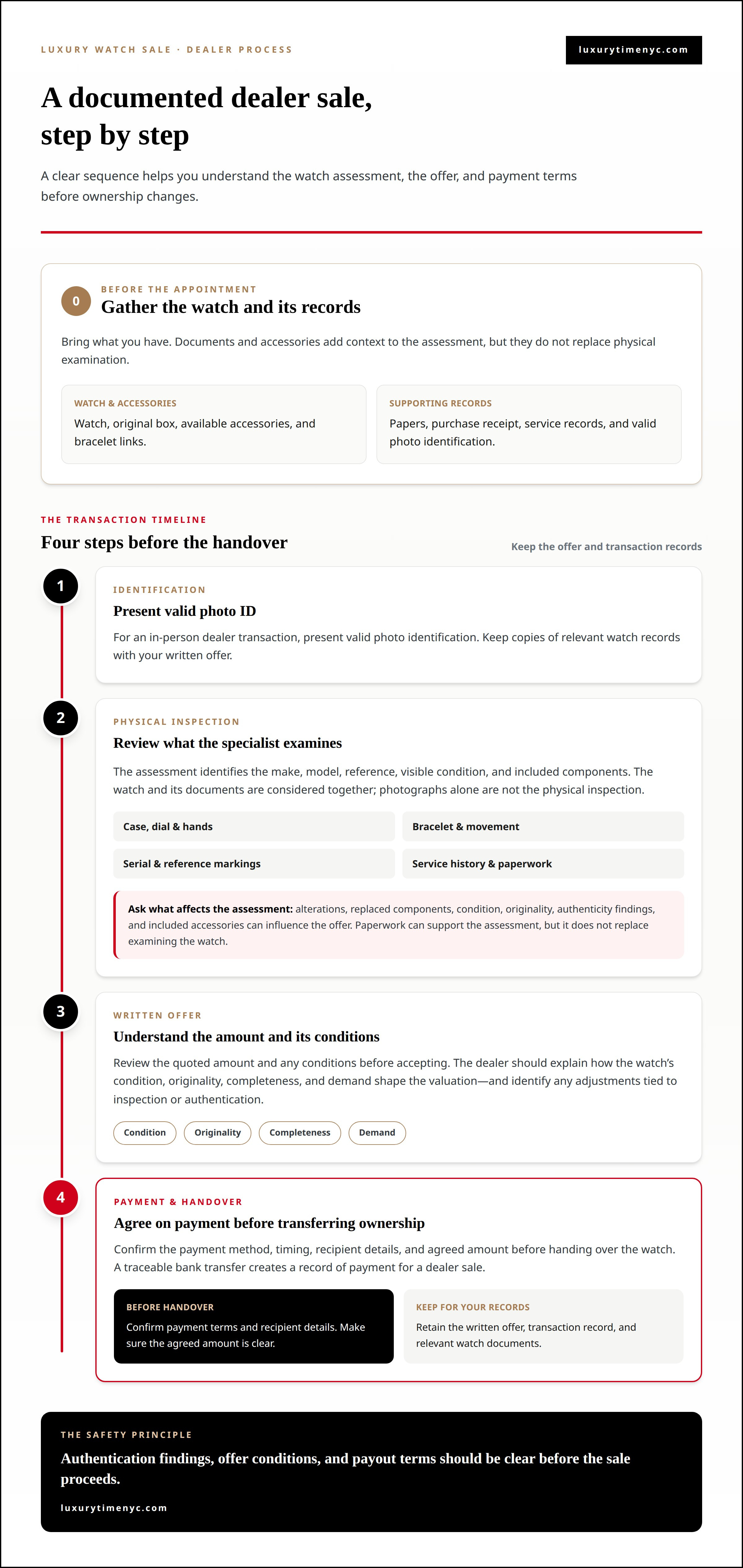
Before transferring ownership, make sure the transaction sequence is clear. A careful process includes these steps:
- Identification: Present valid photo identification when meeting the dealer.
- Inspection: Let the specialist examine the watch and its documents together.
- Written offer: Review the quoted amount and any stated conditions before accepting.
- Payment: Agree on the payment method and timing before handing over the watch.
A traceable bank transfer creates a record of payment for a dealer sale. Confirm the recipient details and agreed amount before handing over the watch. Keep the written offer and transaction record with your watch documents. These records make the exchange easier to review if questions arise.
To sell with greater clarity, provide the box, papers, receipts, and service history you have. A Rolex with its original box and purchase documents, for example, gives the dealer more context than the watch alone. The specialist can distinguish documented history from details established by inspection. A fair offer reflects authenticity, condition, originality, and included accessories, not paperwork in isolation.
What is the safest way to get cash for a luxury watch through a specialist dealer?
A specialist dealer can inspect your watch, make a direct offer, and explain payment terms before ownership changes. The safest route is a documented transaction, with authentication findings and payout terms clear in advance.
Documents and Accessories to Provide
Bring the watch with its original box, papers, purchase receipt, service records, and available accessories. These give the specialist more context and can inform the offer. A Patek Philippe with its documentation and bracelet links, for example, presents a fuller picture than the watch alone. Valid photo identification supports an in-person dealer transaction. Keep copies of relevant records with the written offer.
Dealer and Consignment Safety and Fees
A dealer purchase gives you a direct offer and agreed payment. A specialist may complete the purchase the same day. With consignment, the watch is listed for resale, and you receive payment after the sale according to the contract’s commission and timing terms. Commission and deductions depend on the agreement. In the United States, tax treatment depends on purchase cost, sale proceeds, and individual circumstances. Keep the relevant records for tax reporting and assessment.
Marketplace and Private Sale Risks
With a marketplace sale, you manage buyer identity, payment, shipping, and disputes. A private buyer may ask for more photographs or change arrangements, adding steps before funds clear. An authorized dealer belongs to a manufacturer’s sales network, but that status alone does not mean it buys pre-owned watches. A specialist dealer offers an in-person inspection and direct transaction; private sales require more coordination.
How a Specialist Dealer Sets a Selling Price
A dealer weighs the reference, condition, originality, completeness, and demand for that particular timepiece. Recent comparable sales help frame the offer, while missing papers or replaced components can alter its assessment. The quote should distinguish the watch’s condition from its accessories and explain any adjustments. For a considered assessment, professional watch authentication helps establish the details that inform a sale.
Getting a quote and shipping a watch
A specialist quote starts with the watch’s identifying details and condition. Clarify shipping arrangements before the timepiece leaves your possession.
Getting a Quote
Start with the manufacturer, model, reference number, and photographs of the dial, case, clasp, and movement, if accessible. A Rolex reference and clear views of its condition, for example, help the dealer identify the watch and make an initial assessment. Include service history, replaced components, and accessories, as each can affect the valuation.
A remote estimate depends on the information you provide, while an in-person inspection can reveal details photographs miss. Ask for a written quote that separates the offered amount from conditions tied to authentication or physical inspection. The dealer should explain how condition, originality, completeness, and demand shape the figure. Before shipping, understand whether examination can change the initial quote and how a revised offer is handled.
Prepaid Insured Shipping Arranged by the Dealer
If the dealer arranges prepaid shipping, confirm who provides the label, packaging instructions, and carrier details before dispatch. Follow the instructions and retain the tracking receipt and shipment record. A documented handover shows when the carrier accepted the package and provides a tracking reference.
Discuss insurance separately. Get written confirmation of transit coverage, the insured value, and when protection begins and ends. A shipping label alone does not specify insurance limits or exclusions. Clarify how receipt is recorded and how the dealer handles a parcel that arrives damaged or fails to reach its destination.
Use the agreed shipping method, and don’t include personal notes that identify the contents. Photograph the watch and packaging before sealing the parcel, and save the images with the tracking confirmation. These records help document the watch’s condition and the package handover. After receipt, a physical inspection can establish whether the final offer matches the initial assessment.
What is the safest way to sell a luxury watch through a specialist dealer instead of privately?
A specialist dealer provides a defined process: professional inspection, a stated offer, and agreed payment. A private sale can take days or weeks, while a dealer may complete a purchase the same day. For sellers who value a clear handover, the dealer route reduces the arrangements they must manage themselves.
If you choose a private sale, treat buyer identity, payment, and delivery as separate decisions. Research the prospective buyer, review their reputation and credentials, and put all terms in writing. Before releasing the watch, clarify the price, payment method, inspection expectations, and delivery plan. Don’t treat a message or payment screenshot as proof that funds have cleared.
- Keep the watch’s reference details, photographs, and condition notes consistent across the listing and sale agreement.
- Use a traceable payment method and confirm receipt through your own account before transferring ownership.
- Agree how the buyer will inspect the watch and what happens if its condition is disputed.
- For an in-person exchange, choose a professional setting and retain a written record of the transaction.
These safeguards take more coordination than a direct dealer sale. A dealer can authenticate the watch and make an offer based on its condition, originality, and demand. A private buyer may negotiate after inspection, so document the watch’s condition before shipping or handover. Original papers, a box, and accessories can affect the offer, so an accurate inventory is useful whichever route you choose.
Choose the route that fits your priorities. A private sale can involve more buyer communication and uncertain timing; a dealer transaction offers a direct quote and a defined payment discussion. If you prefer a professional assessment before deciding, request a specialist watch assessment.
Luxury Time NYC
Luxury Time NYC offers a specialist assessment when you’re considering selling or trading a luxury watch. Its watch authentication service assesses a timepiece’s authenticity, while its condition and accompanying documentation inform the sale discussion.
Whether you own a Rolex, Patek Philippe, Audemars Piguet, or Richard Mille, a conversation with a specialist can clarify the process and your options. Located in New York’s historic Diamond District, Luxury Time NYC serves collectors interested in distinguished timepieces.
For a discreet conversation about your watch, contact Luxury Time NYC.
Make Your Next Watch Decision With Clarity
The safest way to sell a luxury watch involves more than completing a transaction. Consider what you want for the next chapter of your collection, whether that means selling outright or exploring a trade. A thoughtful discussion can help you weigh the watch’s provenance and your priorities.
Luxury Time NYC works with collectors interested in Rolex, Patek Philippe, and Audemars Piguet watches. Share your watch’s details and what you hope to achieve. A specialist conversation can clarify the relevant considerations before you decide how to proceed.
Contact Luxury Time NYC to discuss your watch. Take the next step at your own pace, with a clear sense of the decision ahead.
Frequently Asked Questions
How do specialist dealers protect sellers during the transaction?
Specialist dealers protect sellers by making the transaction traceable from initial assessment through final payment. A written record can identify the watch, describe its condition, state the offer, and record the agreed payment method. Before accepting, confirm that the document reflects the actual terms. For an online sale, retain correspondence and shipment records together so each stage can be clearly matched to the transaction.
How can a specialist dealer verify a luxury watch buyer is legitimate?
When selling directly to a dealer, assess the business you’re dealing with. Confirm its business identity and physical or online presence, and verify that payment instructions come through its established communication channels. Make sure the written offer names the correct business and watch. If someone else arranges collection or payment, have the dealer confirm that person’s role before releasing the timepiece.
How can a specialist dealer verify a luxury watch’s authenticity and document its condition before buying it?
A specialist examines the watch’s markings, reference details, components, and movement, then records its visible condition and any discrepancies. The assessment should distinguish original features from later replacements or alterations. Photographs of the dial, case, bracelet, clasp, and serial markings can support the inspection record. Papers and service documents provide context, but the physical watch remains central to authentication.
How can a specialist dealer price a used luxury watch using recent sales data?
A dealer can compare the watch with sales of the same reference, then adjust the assessment for condition, originality, completeness, and current demand. Comparisons are most useful when the model and configuration closely match your watch. Ask how differences such as missing bracelet links, service history, or altered components affect the offer. This helps you understand the reasoning behind the figure.
What payment methods are safest when a specialist dealer buys a luxury watch in person or online?
A traceable bank transfer is a practical option because it creates a transaction record. Before handing over the watch, check the recipient name, amount, and payment timing against the written agreement. For an online transaction, use the dealer’s established payment instructions and retain the confirmation. In person, verify that the funds have reached your account rather than relying on a transfer screenshot.
How can a specialist dealer help sellers avoid scams, chargebacks, and counterfeit returns?
A dealer can reduce disputes by recording the watch’s identifying details and condition before the transaction, then documenting receipt and payment. For shipped watches, retain carrier records and package documentation. If a watch is returned or payment is challenged, these records can clarify what was sent and received. Keep copies of the offer, inspection notes, correspondence, and payment confirmation together.


