


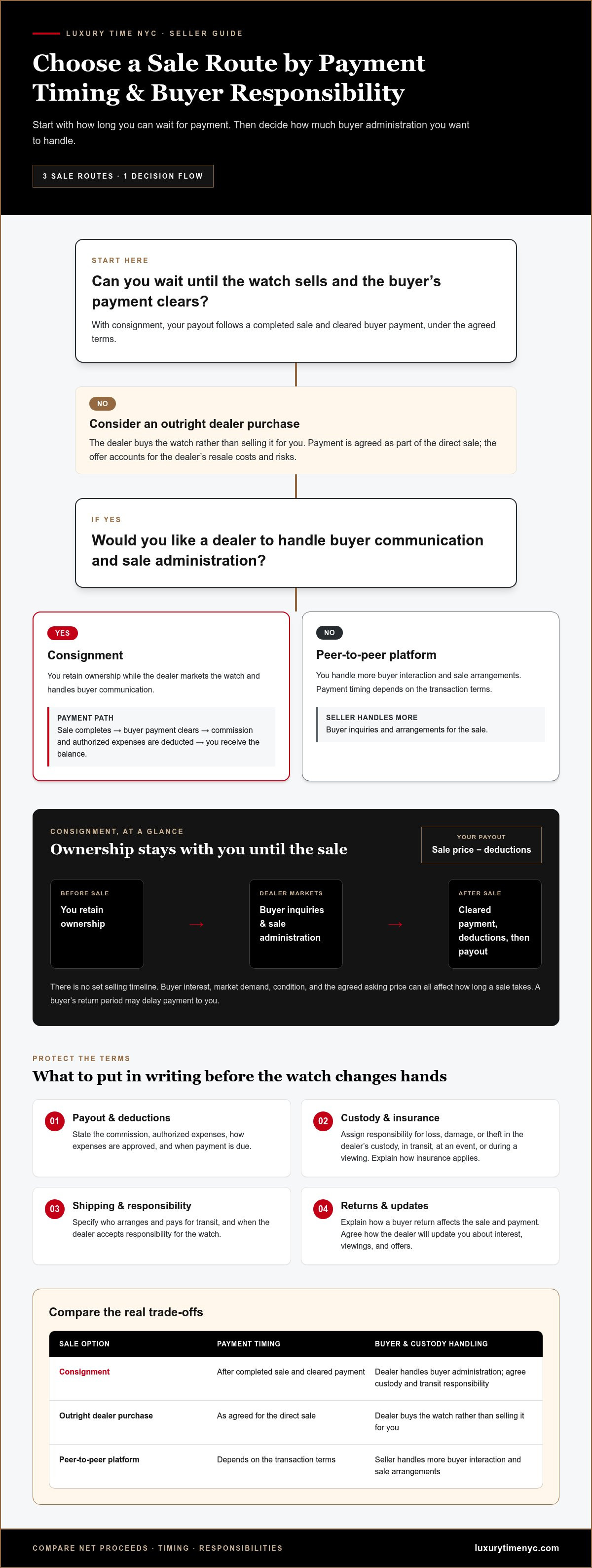
A higher sale price can mean a longer wait. In the watch consignment process for sellers, you retain ownership while a dealer markets and sells your watch, then deducts commission and pays you the balance once the sale is complete and the buyer’s payment clears under the agreed terms. Your payout depends on the sale price, commission, and any authorized expenses.
Consignment may appeal if you have time to pursue a potentially higher offer. An outright sale offers a more direct transaction. The key difference is not just the headline price, but what you receive, when you receive it, and who is responsible for the watch at each stage.
This guide explains how to assess a consignment offer, prepare your watch and agreement, and understand insurance, shipping, payment timing, and buyer services. Comparing consignment with an outright sale can help you weigh convenience against potential proceeds and choose the option that suits your watch and priorities.
Key Takeaways
- Compare the likely net proceeds and payment timing, not just the advertised sale price, before choosing how to sell.
- Put commission, authorized expenses, responsibility for loss or damage, and the unsold-watch return process in writing.
- Gather the watch’s reference, service history, photographs, and accessories to support a clear valuation and listing.
- Preserve originality: discuss any polishing or repairs before work begins, since a cosmetic refresh may not improve desirability.
Insurance, payment, shipping and buyer services
In a consignment sale, the dealer deducts commission and pays you the balance after the sale. Written terms should also cover custody, shipping, and buyer returns.
There is no set timeline for selling a consigned watch. Buyer interest, market demand, condition, and the agreed asking price all affect how long the sale takes.
Payment After a Sale
Payment follows a completed sale and the buyer’s payment clearing under the agreed terms. The dealer deducts its commission and any authorized expenses, then pays you the net proceeds. This differs from an outright purchase, where payment is agreed as part of the direct transaction rather than after a resale. Request a final statement itemizing the sale price, commission, expenses, and payout.
Consignment Risks
A luxury watch could be damaged, lost, or stolen in the dealer’s custody, in transit, at an event, or during a viewing. The agreement should assign responsibility for each situation and explain how insurance applies. Establish whether payment is delayed until the buyer’s return period ends, as this can postpone your payout after the buyer pays. Unlike peer-to-peer selling, consignment places buyer communication and sale administration with the dealer, but custody and payment terms still matter.
Shipping terms should state who arranges and pays for transit, and when the dealer accepts responsibility. For valuable timepieces, protective packaging such as custom foam inserts for shipping helps prevent impact damage during transit. Buyer services may include handling inquiries, viewings, offers, and sale administration. Ask how the dealer will update you on interest and offers, and ensure the agreement explains how a return affects the sale and payment.
| Sale option | Payment timing | Buyer and custody handling |
|---|---|---|
| Consignment | After completed sale and cleared payment | Dealer handles buyer administration; agree on custody and transit responsibility |
| Outright dealer purchase | As agreed for the direct sale | Dealer buys the watch rather than selling it for you |
| Peer-to-peer platform | Depends on the transaction terms | Seller handles more buyer interaction and sale arrangements |
Choose by weighing payout timing, responsibility for custody, and how much buyer administration you want handled.
Thinking About Selling Your Watch?
With consignment, you retain ownership while a dealer markets the watch and handles buyer communication. A direct dealer purchase is a separate transaction that transfers the watch to the buyer, usually at a lower offer because the dealer accounts for resale costs and risks. Selling through an online marketplace gives you more direct control, but you also manage inquiries and sale arrangements.
Set a consignment asking price by reviewing completed sales of the same reference, not optimistic online listings. Compare condition, documentation, accessories, and service history before drawing conclusions. A watch with its box and records may appeal differently from a similar example without them. Demand, brand popularity, and the global economy can also affect prices.
Compare each luxury retailer’s offer against the likely consignment net, not just its headline figure. Subtract the stated commission and authorized expenses from the expected sale price. Then consider payment timing and how long you can wait. Consignment can suit sellers who aren’t in a rush and want the possibility of a higher offer. It can also take longer than selling through an authorized dealer.
Traditional consignment leaves marketing and buyer administration to the dealer. Online marketplace selling can put your watch directly in front of buyers, but you must manage the risks of a peer-to-peer transaction. Before choosing a platform, consider the time needed to create a listing, answer questions, arrange shipping, and handle buyer concerns. Authentication matters either way, so understand how the watch will be checked before it reaches buyers.
When comparing offers, record the proposed amount, commission, expenses, payment timing, and responsibilities for each option. Ask whether the dealer will honor a minimum selling price, then compare it with completed sales. These details help clarify whether a direct purchase or waiting for a consignment buyer better suits you.
For a considered decision, weigh net proceeds against time and transaction responsibilities. Explore selling a luxury watch as part of that comparison.
What Factors Can Affect the Value of Items Listed for Watch Consignment?
A timepiece’s condition, rarity, documentation, and current demand affect its appeal for consignment. Your decision also depends on whether you are willing to wait for a potential sale or prefer a direct purchase.
Consignment may suit sellers seeking the possibility of a higher offer without handling buyer inquiries themselves. An outright sale offers a more direct route, while the dealer’s offer accounts for resale costs and risks. Compare likely net proceeds, not just the suggested listing price. A minimum selling price can set a clear limit on which offers the dealer may accept.
Dealer Reputation
A reputable dealer should explain its authentication process, inspect the watch before listing, and describe how it handles buyer inquiries. Ask how it will update you about viewings, offers, and sales progress. These details distinguish a hands-on consignment partner from a platform that mainly hosts listings. Review the proposed timeline and the dealer’s plan for your specific timepiece.
Commission and Other Fees
There is no single commission for every watch consignment. The dealer’s commission and any authorized expenses should be clear before you agree. Ask how each expense is approved and deducted, then compare projected net proceeds with an outright purchase offer. A higher asking price may not mean a better payout if commission or permitted costs reduce your balance.
Consignment Agreement Terms
A sound agreement identifies the watch, records its condition and included accessories, and states the asking price, commission, payment timing, and process for returning an unsold watch. It should also set out a minimum selling price, if applicable. Require written approval for proposed servicing, replacement parts, or repairs, including the cost. These terms define the transaction more clearly than a verbal estimate.
Before choosing, consider whether the dealer’s authentication and communication practices meet your priorities. Consignment may suit a seller willing to wait; a direct purchase may suit someone prioritizing a more immediate sale. Either way, assess the offer against the watch’s condition, documentation, demand, and likely net proceeds.
Steps in the watch consignment process
A clear handoff record helps protect the watch’s condition and clarify each stage of the transaction. Gather its records first, then review the listing and sale terms before accepting an offer.
- Assemble the watch’s details. Record its model and serial number, service history, and known refinishing, replacement parts, dial work, moisture damage, or mechanical issues. Gather photographs of the dial, case sides, bracelet, clasp, caseback, and accessories. These details help the dealer assess the individual timepiece before setting a listing price.
- Prepare the watch and accessories. Wipe the case and band with a microfiber cloth, and remove debris from the bracelet or strap. Include original boxes, extra links, and other accessories. Avoid polishing or arranging repairs before discussing them with the dealer. Original surfaces or parts may be more valuable than a cosmetic refresh.
- Review the valuation and agreement. Compare the proposed listing price with completed sales of the same reference and similar condition. Read the agreement for the watch’s description, recorded condition, delivered accessories, price, commission, payment timing, and unsold-watch return process. Approve proposed servicing, replacement parts, or repairs, including costs, in writing.
- Document the handoff. Record that the dealer has taken possession and note the watch’s condition and included items. Keep a copy of that record with the agreement. This establishes what was delivered before the watch is photographed, authenticated, and presented to buyers.
- Review the live listing. Check the reference, condition, accessories, and disclosures against your records. Correct any discrepancy before buyers rely on the description. During the listing, follow updates on viewings, inquiries, and offers, and refer to the agreed minimum selling price when evaluating proposals.
Use this sequence to keep records aligned from valuation through sale. Explore your watch-selling options as you prepare the next step.
Luxury Time NYC: Rolex Watches
Luxury Time NYC offers Rolex, Patek Philippe, Audemars Piguet, and Richard Mille watches. If you are weighing consignment against an outright sale, discuss your timepiece and the selling route you are considering with the team.
Bring the details that identify and describe your watch: its reference, condition, service history, and accompanying documentation. These particulars give context to a conversation about a distinguished model, whether it is a Rolex with a notable history or a Patek Philippe with original accessories. Luxury Time NYC also buys, sells, and trades high-end watches, giving sellers a direct option to explore instead of waiting for a consignment buyer.
For a discreet discussion about your watch and selling options, contact Luxury Time NYC.
Choose a Selling Route That Fits Your Priorities
The watch consignment process for sellers comes down to control, timing, and the role you want to play in the sale. Before moving forward, decide what matters most: a direct transaction, the possibility of a different market outcome, or having a dealer manage buyer communications. Let that priority guide your next conversation.
For an heirloom or a watch with personal significance, the decision can feel as considered as the timepiece itself. Luxury Time NYC offers Rolex, Patek Philippe, and Audemars Piguet watches, and works with owners considering a sale. Bring the watch’s reference and any records that help establish its history, then discuss the route that suits your goals.
Contact Luxury Time NYC about selling your watch and take the next step with clarity and confidence.
Frequently Asked Questions
How does the watch consignment process work for sellers?
The watch consignment process for sellers starts with an assessment and agreed sale terms. You retain ownership while the dealer presents the watch to potential buyers and manages sale communications. Once a buyer completes the purchase, the dealer deducts the agreed commission and authorized expenses, then pays you the balance according to the payment terms. Keep a copy of the agreement and handoff record.
What steps should sellers take before consigning a watch?
Before consigning, gather the watch’s reference and serial number, service history, and clear photographs. Note any known damage, replaced parts, refinishing, or mechanical concerns so the listing describes the watch accurately. Make a separate inventory of the accessories delivered with it. Keep copies of the agreement and condition record, and do not authorize servicing or repairs until the proposed work and cost are documented.
What documents and authentication are required to consign a watch?
Depending on the agreement, useful supporting materials may include the warranty card, purchase receipt, service records, and original box or booklets. Their absence does not establish that a watch is inauthentic, but it may affect how its history and completeness are represented. A dealer can inspect and authenticate the watch. Provide the serial number and disclose replaced components or prior dial work to support an accurate assessment.
How do watch consignment shops determine a watch's value and asking price?
Dealers assess the specific reference, condition, originality, documentation, accessories, and current buyer demand. A limited or discontinued model may attract interest, while visible wear or missing records can affect its appeal. Compare completed sales of equivalent watches rather than unsold asking prices. Because the listing price is a starting point for negotiation, clarify whether the dealer will follow a minimum selling price you set.
When and how do sellers get paid after a watch sells?
You are paid after the sale is complete and the buyer’s payment has cleared under the agreed terms. The dealer deducts its commission and any authorized expenses, then transfers the remaining proceeds according to the agreement. If the contract makes payment conditional on the end of the buyer’s return period, that may delay your payout. The final statement should show the sale price, deductions, and net payout.
What happens if a consigned watch does not sell or the seller wants it back?
The agreement should explain what happens if the watch remains unsold at the end of the listing period and how you can request its return. Review any notice requirements, return-shipping arrangements, and costs before signing. To get the watch back earlier, follow the agreement’s cancellation terms and request a documented return. Keep the handoff record so you can compare the returned watch and accessories with the original inventory.


