


A water-damaged watch may still be recoverable, but moisture inside can harm its movement. Knowing how to spot water damage in a watch starts with looking for fog beneath the crystal, droplets inside the case, discoloration on the dial or hands, and a crown or pusher that feels stiff.
These signs deserve attention even if the watch still keeps time. Moisture can remain hidden, and visible damage may appear only after delicate components are affected. Act promptly but carefully: stop operating the watch and don’t try to dry it with heat.
This guide explains how to recognize warning signs, what a visual check of the crown and seals can reveal, and what to do after water exposure. You’ll also learn when a watchmaker’s assessment is the sensible next step, helping protect the timepiece without adding risk through well-intended home remedies.
Key Takeaways
- Look for fog beneath the crystal, droplets, dial or hand discoloration, and crowns or pushers that feel stiff.
- After water exposure, stop operating the watch and avoid heat or home remedies that could worsen damage.
- A musty odor can be another warning of trapped moisture, even when the exterior appears dry.
- Check that the crown is properly seated, and consider professional pressure testing to assess the seals.
Can a water-damaged watch be saved?
- Inspect the crystal in good light. Fog on its underside points to moisture trapped inside, though it doesn’t prove a leak. Droplets are a stronger warning that water may have entered the case. Check the crystal from several angles, since a light haze can be easy to miss. If fogging remains after 24 hours of air drying, seek watchmaker help rather than assuming the watch is entirely dry.
- Examine the dial and hands for color changes, spots, or darkened luminous material. Discoloration can indicate that water has reached deeper into the case. Luminous material that no longer glows or has visibly darkened may also signal moisture inside. Compare the watch with a clear memory or photograph of its earlier appearance, if available. Don’t mistake a reflection on the crystal for a mark on the dial.
- To spot water damage, look for fogging beneath the crystal, interior droplets, discoloration on the dial or hands, and changes to luminous material. These visible signs can indicate moisture inside even when the case exterior looks dry. A stiff or sticky crown or pusher can also signal that moisture is affecting operation. Don’t press the controls to test them. Note which signs you see and whether they appeared after rain, a spill, or other water exposure.
- A water-damaged watch may be saved, but prompt assessment matters because moisture can lead to corrosion. Stop operating it and avoid opening the case yourself. A watchmaker can open the case, dry components, apply anti-corrosion treatment, and replace seals. Severe cases may require disassembling and drying more than 100 pieces. Don’t rely on rice; it isn’t enough to dry water inside a watch. If you’re learning how to spot water damage in a watch, treat visible moisture as a reason to act, not as proof the timepiece is beyond repair.
Musty or moldy smells from trapped moisture
- Notice any musty or moldy odor near the case, especially after water exposure. Trapped moisture can produce an unusual smell even when the crystal looks clear and the exterior feels dry. Record when the odor began and whether it followed a specific event, such as rain or a spill. A smell alone can’t show how far moisture has traveled, but it’s a reason to stop wearing the watch and arrange an assessment.
- Watch for condensation that persists or returns as the watch moves between environments. Fog that clears and then reappears, for example, suggests moisture remains inside rather than a surface mark. A water-resistance rating in meters describes the watch’s design rating, not the current condition of aged or damaged gaskets. A clear crystal at one moment doesn’t prove the case is dry. Note any changes without opening the case or operating its controls.
- Keep the watch away from direct heat while deciding what to do next. A hair dryer, radiator, or other high-heat source can deform seals and affect lubricating oils, particularly in a mechanical movement. Instead, leave the watch undisturbed in a dry place and arrange professional attention if odor or condensation remains. Proper drying may require opening the case, treating components, and replacing damaged gaskets. Home remedies that address only the exterior can’t confirm whether internal moisture has been removed.
For persistent internal moisture, avoid improvised home fixes and trust the specialists at Luxury Time NYC to properly open, dry, and restore your timepiece.
Urgent steps to take after water exposure
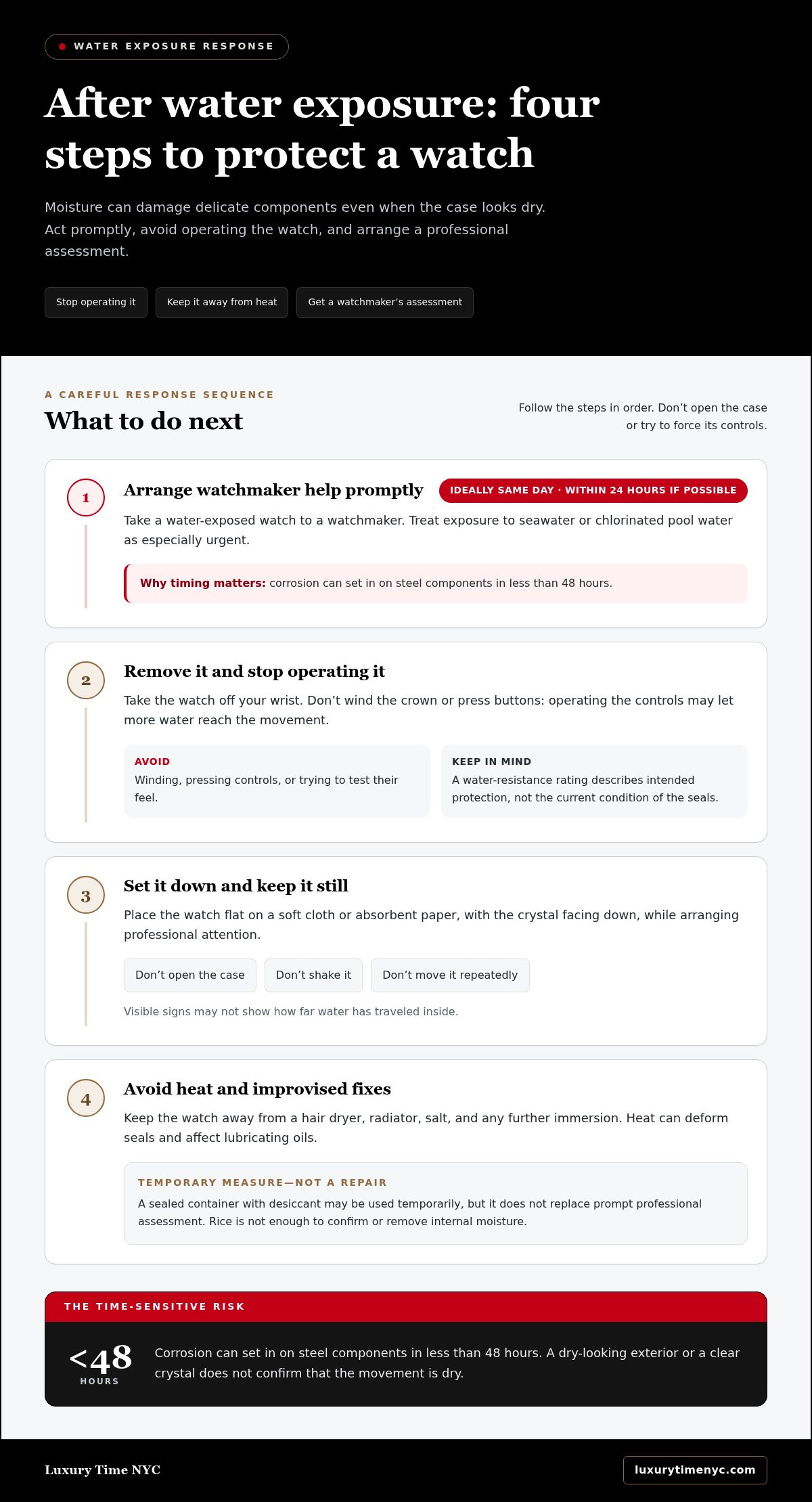
- Take a water-exposed watch to a watchmaker promptly, ideally the same day and within 24 hours if possible. This is especially urgent after seawater or chlorinated pool water exposure. Corrosion can set in on steel components in less than 48 hours.
- Remove the watch from your wrist and stop operating it. Don’t wind the crown or press buttons, since these actions may let more water reach the movement. If water is inside a mechanical or automatic watch, pulling out the crown may stop the mechanism and reduce gear damage. Don’t do this underwater.
- Set the watch flat on a soft cloth or absorbent paper, with the crystal facing down. Keep it still while arranging professional attention. Don’t open the case, shake the watch, or move it repeatedly, as these actions can spread moisture. Visible signs may not show how far water has traveled inside.
- Avoid high heat from a hair dryer or radiator. Heat can deform seals and affect lubricating oils, even if the exterior appears dry. Don’t add salt or immerse the watch again. A sealed container with desiccant may serve as a temporary measure, but it doesn’t replace prompt assessment. A resistance rating describes intended protection, not the watch’s current seal condition. During normal use, the crown should be properly screwed down or pushed in, but don’t manipulate it after suspected water ingress.
For a fogged watch, leave it in a bag of rice or desiccant for two to three days to draw out moisture. This is only a temporary measure, not a substitute for prompt professional assessment if you suspect water inside the watch.
Checking watch gaskets and seals
- Check that the crown is fully pushed in or screwed down, if the model has a screw-down crown. A crown left partly open can compromise water resistance. Don’t force it: correct operation and intact seals, not extra pressure from your fingers, should provide a proper fit. If the crown feels loose or won’t seat properly, keep the watch away from water and arrange an inspection.
- Consider the watch’s history before relying on its rating. Extreme temperatures and pressure changes can dry out or tear seals, while a bump to a prominent crown can damage its gasket. A watch that once tolerated swimming may no longer have the same protection after an impact or with age. Vintage pieces deserve particular caution because their original seals may no longer provide reliable resistance.
- Use the stated rating as a guide, not proof of present condition. A 3 ATM/30M rating is described as suitable for everyday wear, light splashes, and rain, but not submersion. A 50 m rating is described as suitable for light swimming. Don’t assume either rating makes a watch appropriate for diving, or that its seals remain sound without testing.
- Prevent water damage by keeping the crown properly seated, avoiding water exposure when seal condition is uncertain, and arranging water-resistance testing every 2 to 3 years, especially when changing the battery. Have the watch checked after a hard impact, since damage to the crown or case can allow water inside the watch without obvious exterior signs.
- Leave gasket inspection and replacement to a watch professional. Don’t apply petroleum-based lubricants such as WD-40; they can damage or melt watch gaskets. A pressure test assesses water resistance more reliably than a visual check. For a watch that needs a professional pressure test, arrange watch pressure testing before swimming or diving, particularly after repair or impact.
Luxury Time NYC: Rolex Watches
Luxury Time NYC offers Rolex watches for collectors considering a timepiece after water damage. Have the affected watch assessed first: visible moisture alone can’t determine whether repair is practical or whether the movement has suffered corrosion. If you’re considering a replacement or another addition to your collection, explore Rolex, Patek Philippe, Audemars Piguet, and Richard Mille watches. Each offers a distinct option, and the right direction depends on your collection and priorities, not moisture signs alone.
For guidance on available watches, contact Luxury Time NYC or visit luxurytimenyc.com.
Protect the Next Chapter of Your Timepiece
Knowing how to spot water damage in a watch is one part of thoughtful ownership. Preserving a clear record of its care is another. Note when exposure occurred, what you observed, and any changes in how the watch functions. These details can help inform an assessment and future decisions about wearing the watch. Careful attention now supports a more considered relationship with a treasured piece over time.
Choose your next step with the watch’s condition and history in mind. If you would like to discuss your timepiece or explore the collection, contact Luxury Time NYC. A measured decision is a fitting way to care for fine watchmaking.
Frequently Asked Questions
Emergency reflexes: what to do if water has gotten into your watch?
Stop using the watch and arrange a professional assessment. Note what happened, including whether exposure involved rain, a sink, pool water, or the sea, and whether the watch was running afterward. This context can help the watchmaker assess potential contamination and effects on the movement. Keep the watch away from further water, and don’t test its operation before it’s examined.
My watch has fog under the crystal. What should I do?
Arrange professional attention if fog appears beneath the crystal, particularly if it returns after clearing. A surface smudge can be wiped away; condensation beneath the crystal cannot. Avoid heating the watch or deliberately changing its temperature to clear the haze. Describe when the fog appears, such as after entering a warm room from outdoors, and whether it lasts or recurs.
Watch that has taken on water: what should I do urgently?
Prioritize prompt assessment if the watch was exposed to seawater or chlorinated pool water. These exposures can leave residues that threaten internal components, so don’t wait for the watch to stop keeping time before acting. Protect it from impact and further splashes during transport. Tell the watchmaker what kind of water was involved and how the exposure happened.
What are the signs of water damage in a watch?
Look for changes inside the case, rather than marks that wipe off the exterior. Interior haze, droplets, altered dial or hand color, and unusual behavior from the crown or pushers can all be warning signs. A musty odor adds concern, even without visible condensation. Note which signs occur together and when they first appeared.
What does discoloration or corrosion on a watch dial and hands indicate?
Discoloration on the dial or hands can indicate that water has reached deep inside the case; corrosion suggests metal components may be affected. Appearance alone can’t establish the full extent of damage. Avoid rubbing the dial or applying cleaning products, which may disturb delicate surfaces. Leave the watch as it is and describe the visible changes during assessment.
Can a watch still work after water damage?
Yes, a watch may continue running after water enters, but that doesn’t mean its movement is unharmed. Moisture can affect components before timekeeping visibly changes, and corrosion may develop later. Don’t take accurate timekeeping as reassurance or keep wearing the watch to monitor it. Have suspected internal moisture assessed before returning the watch to regular use.


