


Price is useful only when the diamond details match. A disciplined approach to avoiding scams in the Diamond District means comparing the same specifications, reviewing a GIA grading report, getting return terms in writing, and avoiding street hawkers. Before and after a diamond is set, match its laser inscription to the report number.
Shopping around is sensible, but a polished presentation or striking discount isn’t proof of value. Compare offers on equal terms, read the documentation, get the agreed terms on your receipt, and verify the diamond’s identity before deciding.
Key Takeaways
- Confirm the report identifies the specific stone and clearly states whether it is natural or lab-grown.
- Read the return terms closely: a money-back policy is different from an exchange or store credit.
- Decline unsolicited street offers; an unusually low price can signal that the stone or its description deserves scrutiny.
- Keep the report number connected to the diamond through setting, and match it to the laser inscription afterward.
1. Checking diamond grading reports
Start with the documentation, not the seller’s description. GIA and the American Gem Society (AGS) are recognized organizations for diamond-grading standards. A GIA grading report provides a consistent reference for assessing a stone’s stated characteristics. Treat a verbal description such as “top color” as a claim to compare with the written report, not a substitute for it.
Before buying, request the grading report and compare its details with the diamond being offered. Ask in writing whether the diamond is natural, and make sure its origin is stated in the grading report and recorded in the sale documents.
Read the report’s grading details carefully, including carat weight, color, clarity, and cut. These characteristics affect how a stone is described, so compare like with like when reviewing offers. A diamond advertised as D color and VS1 clarity, for example, should not be treated as equivalent to a stone with lower grades. In an overgrading example, a diamond described as D and VS1 was graded two or three grades lower when re-checked by GIA. That difference can materially change how the offer should be assessed.
Research the jeweler as carefully as the stone. Search the business name and address, then read recent reviews and detailed accounts of completed purchases. Look for specific comments about whether an item matched its documentation, whether written terms were clear, and how the seller handled concerns. Reviews describing an actual transaction offer more insight than generic praise. Check responses to critical reviews, too. A measured, specific response can provide context, while repeated unresolved complaints about grading or documentation deserve attention. Compare the seller’s claims with the report and written terms before deciding.
2. Getting return policies and guarantees in writing
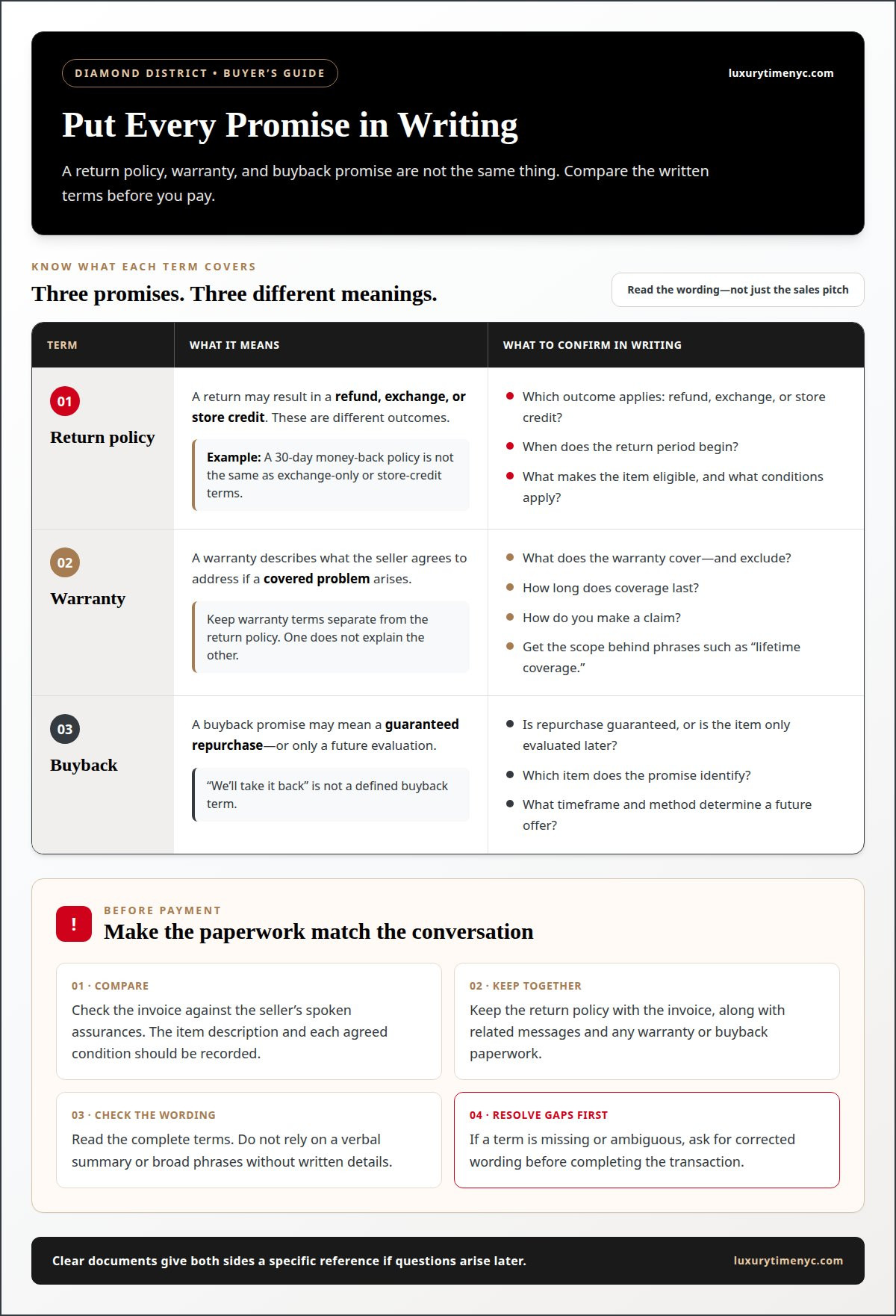
For a jewelry purchase in New York, establish the seller’s written return terms before payment. A refund, exchange, and store credit are different outcomes, so don’t treat them as interchangeable.
Ask for the complete return policy and keep it with the invoice. A 30-day money-back policy means something different from an exchange-only or store-credit policy. Confirm when the period begins, how the seller defines an eligible return, and whether the policy has conditions. Read the wording rather than relying on a verbal summary. If the seller says a refund is available, the receipt or invoice should say so plainly.
Keep the return policy separate from any warranty. A return policy sets out whether you can bring back a purchase under stated conditions; warranty terms describe what the seller agrees to address if a covered problem arises. Ask what the warranty covers, how long it lasts, and how to make a claim. Don’t rely on broad phrases such as “lifetime coverage” without written terms explaining the scope and exclusions.
Buyback promises need the same precision. Ask whether the offer guarantees a repurchase or only a future evaluation, and get the conditions in writing. The document should identify the item, the relevant timeframe, and how a future offer will be determined. “We’ll take it back” is not a defined buyback term.
Before signing, compare the paperwork with the seller’s spoken assurances. Make sure the invoice records the item description and any agreed return, warranty, or buyback condition. Keep the receipt, policy, and related messages together. If a term is missing or ambiguous, ask for corrected wording before completing the transaction. Clear documents give both sides a specific reference if questions arise later.
Before paying, get the seller’s return terms in writing. Check whether the outcome is a refund, exchange, or store credit, and note the deadline and eligibility conditions. Keep any warranty or buyback promises separate, with their terms documented on the invoice or in related paperwork.
3. Avoiding street hawkers
On West 47th Street, keep diamond shopping inside a deliberate, documented transaction. Don’t buy from or sell jewelry to someone who approaches you on the street. A passerby’s offer can’t replace a seller’s written description, grading report, and clear terms. If a stranger urges you to follow them, view a stone, or decide immediately, decline and continue to a business you chose yourself. You don’t owe an explanation.
That dramatic difference is a warning, not proof of a rare bargain. The stone may not match the first diamond’s grading, may be misrepresented, or may not be what the seller claims. Without documentation and a traceable seller, the low price tells you little about the diamond’s true characteristics.
If approached, say you’re not interested, don’t disclose your budget, and keep moving. Don’t hand over cash, a card, identification, or personal details to a street hawker. Avoid following someone to another location or accepting a stone for an informal inspection. Pressure to act quickly makes it harder to compare documents and assess an offer calmly.
If you’re comparing sellers, use the same written criteria for each offer: the grading report, the stone’s stated characteristics, and the seller’s identity. Don’t make an exception for a street offer. Leave if the person refuses documentation or changes the terms as you ask questions. A claim that a stone is natural, for example, should be supported in writing, not accepted just because the seller sounds confident.
Keep your attention on the transaction you planned. A courteous refusal, a move away from the approach, and a decision to deal only with an identifiable seller are practical safeguards on West 47th Street. Genuine comparison takes place through evidence, not urgency.
4. Verifying diamond details before and after purchase
Before paying, examine the diamond in clear lighting and compare it with its grading report. Match the report number and stated characteristics to the stone. Ask the seller to identify the diamond’s laser inscription and show where it appears. If the inscription can’t be read during the viewing, make inspection a written condition of the transaction.
For an in-person inspection, view the stone in a controlled setting and keep it in sight while it is examined. Compare its appearance and identifying details with the documentation, and make sure the stone is the one named in the report. Agree on the final description and terms before authorizing payment. Don’t hand over funds if the seller substitutes another stone or changes the description.
If paying by credit card, first review the issuer’s written dispute process and applicable terms. Keep the transaction record, receipt, invoice, and seller’s description together. A payment record documents the amount and recipient, while the invoice connects the transaction to the specific diamond. No payment method substitutes for confirming the stone and sale terms.
After purchase, match the diamond’s laser inscription to the report number again. If the diamond is being set, have the number checked before and after setting. Setting can make the inscription harder to access, so keep the report and arrange the comparison while the stone is loose. Confirm that the finished piece contains the diamond documented at purchase. If a jeweler handles the setting, record the stone’s identifying details when it is handed over and returned. Keep dated copies of the report and transaction documents; together, they provide a clear record if questions arise about the diamond’s identity. If the report number and inscription don’t match, pause rather than assume the discrepancy is immaterial.
Luxury Time NYC
Luxury Time NYC offers a considered next step for collectors whose interests extend beyond diamonds to fine watches. The same disciplined approach applies: focus on the specific piece, its identity, and clear transaction details. The collection includes Rolex, Patek Philippe, Audemars Piguet, and Richard Mille watches, each representing a distinct horological tradition. Careful selection matters.
This guidance concerns diamond transactions; it doesn’t extend to diamond sales or grading services. For a luxury watch purchase, turn to Luxury Time NYC when you’re ready to explore these watchmakers through a dedicated retailer in New York’s Diamond District. Contact Luxury Time NYC to discuss its watch selection and your collecting interests.
Make your next purchase a considered one
A careful approach to avoiding scams in the Diamond District begins with patience and clear judgment. Apply the same discernment to every valuable acquisition: understand what you’re considering, assess the details, and choose a transaction with clear documentation. Diamond buying and watch collecting are different pursuits, but both reward an informed eye and a deliberate decision.
For collectors turning their attention to fine timepieces, Luxury Time NYC offers Rolex, Patek Philippe, and Audemars Piguet watches. Explore the house that best reflects your collecting interests, then take the next step at your own pace. A considered acquisition should feel as assured as it is distinguished.
Contact Luxury Time NYC to discuss your interest in fine watches. Let your next choice be guided by clarity, confidence, and lasting appreciation.
Frequently Asked Questions
How to Shop Around?
Compare written offers for diamonds with matching characteristics, then assess what each seller includes in the quoted terms. Avoiding scams in the Diamond District starts with comparing like for like, not simply choosing the lowest price. Record the seller, report number, stone description, and stated conditions. This makes differences easier to spot when reviewing offers side by side.
Warnings: What to Lookout For?
Watch for pressure to decide immediately, reluctance to provide documentation, or claims that change as you ask questions. In avoiding scams in the diamond district, treat discounts of 50% or 70% as a reason to examine the original price basis, not as proof of value. If a seller won’t let you consider the details calmly, step away from the transaction.
What do GIA and AGS diamond certificates include, and how can you verify them?
GIA and the American Gem Society are recognized organizations for diamond-grading standards. A grading report records a professional assessment of a diamond’s characteristics, but it doesn’t establish the seller’s return terms or replace the sale receipt. Check that the report number matches the diamond offered and that any laser inscription matches the report. Keep the report with your purchase documents.
What red flags indicate diamond scams or high-pressure sales tactics in the Diamond District?
An unsolicited street offer, insistence on immediate payment, or refusal to identify the seller are reasons to disengage. Be cautious if a seller dismisses written records or discourages comparison. A claimed bargain based on urgency rather than verifiable diamond details is not a sound basis for purchase. Pause the transaction and leave if the pressure continues.
How can you compare diamond quotes and avoid misleading discounts or inflated appraisals?
Compare the same diamond characteristics across offers, rather than relying on a headline discount or an appraisal used as a reference price. A 50% or 70% reduction may reflect an inflated starting figure. Ask what the quote covers and whether it refers to the specific documented stone. Compare the written details, not just the seller’s description of value.
What should a Diamond District diamond purchase receipt and return policy include?
The receipt should identify the seller and the diamond clearly, including its report number and agreed description. Keep the payment record with it. The return policy should state whether the outcome is a refund, exchange, or store credit, plus the applicable timeframe and conditions. A 30-day money-back policy differs from an exchange-only offer, so retain the exact written terms.


