


For a watch appraisal while you wait in NYC, the cost depends on the timepiece and the depth of assessment required. Published New York examples vary, and a straightforward appraisal can often be completed in about 1 to 3 hours. A detailed written report and a brief market-value opinion serve different purposes, so the scope matters.
It’s reasonable to want clarity about the fee and timing before entrusting someone with a significant watch. A watch appraisal while you wait in NYC may work for a straightforward assessment, but the appraised value is an opinion, not a guaranteed sale price or an offer to buy.
This article covers what can affect appraisal fees, what a report and market-value opinion may include, and how to prepare for an appointment. It also explains what to expect from a watch appraisal while you wait in NYC, since the watch and the scope of the assessment can affect the process.
Key Takeaways
- Appraisal costs vary with the watch and the scope of the assessment; rush service may involve an additional fee.
- A written report can describe the watch’s brand, model, year, condition, and market demand, alongside an opinion of current market value.
- Turnaround depends on the timepiece, the assessment required, and appraiser availability, so scheduling and report delivery are separate considerations.
- A straightforward walk-in appraisal in New York City can often be completed in about 1 to 3 hours, though the assessment’s scope affects the process.
How much does the appraisal service cost?
Published New York City examples range from basic evaluations to formal written reports. The fee depends on the watch and the work included.
NYC Watch Appraisal Fees
These are market examples, not quotes for a particular watch. Before proceeding, clarify whether the fee covers a brief evaluation or a detailed written valuation.
Rush Appraisal Options and Fees
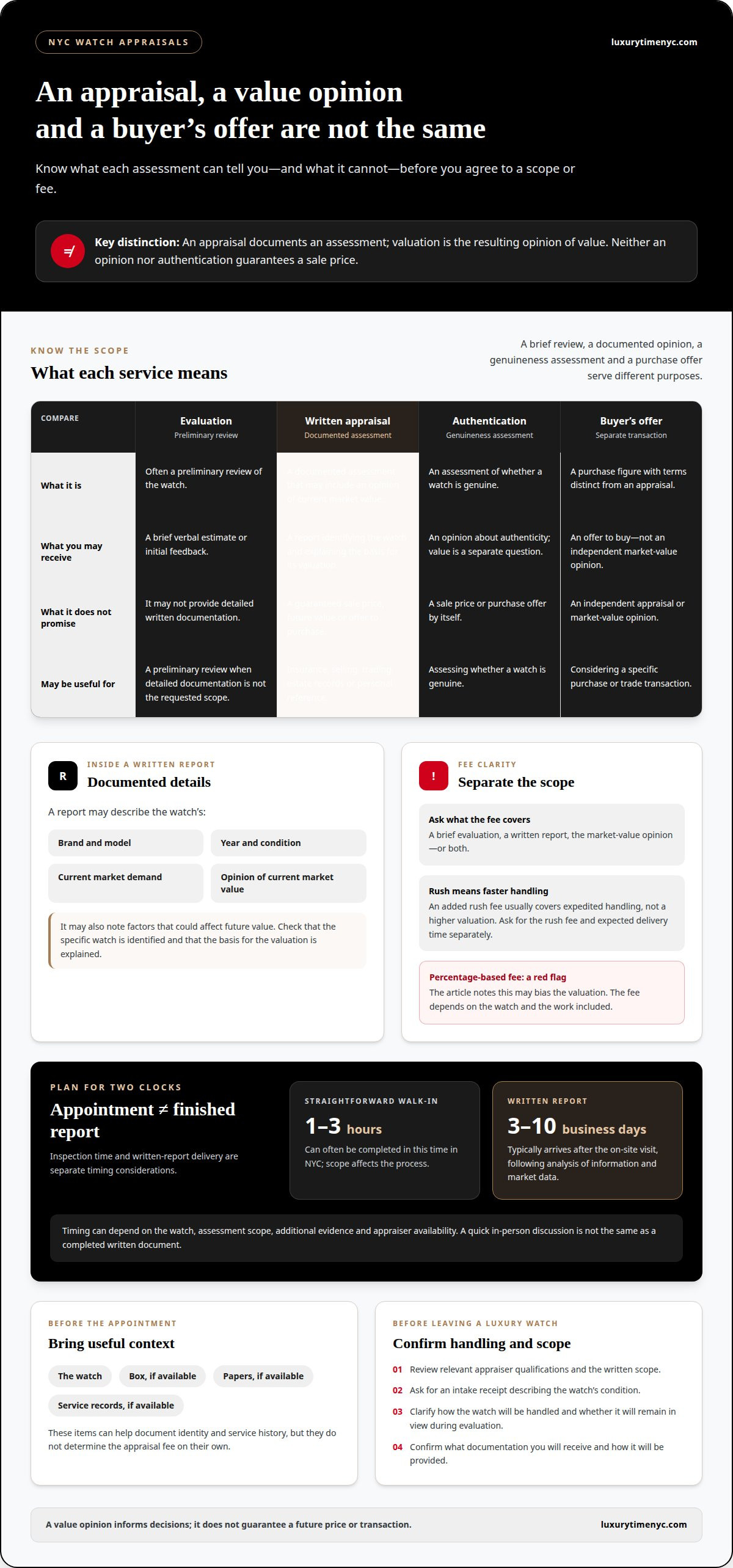
An added fee usually covers expedited handling, not a higher valuation of the watch. Ask for the rush fee and expected delivery time as separate items in the written scope. This makes it easier to compare standard and expedited appraisals without confusing speed with assessed value.
Evaluation and Appraisal Fees
An evaluation is often a preliminary review, while an appraisal usually provides a documented opinion of value. A percentage-based fee is a red flag because it may bias the valuation. Confirm whether the fee covers the report, the market-value opinion, or both, especially if you need documentation for insurance, a sale, or a purchase decision.
An appraisal documents an assessment; valuation is the resulting opinion of value, while authentication assesses whether a watch is genuine. Neither a value opinion nor authentication alone guarantees a sale price.
Some businesses both appraise and buy watches, but an appraisal is not a purchase or trade-in quote. A buyer’s offer is a separate transaction figure, not a substitute for an independent market-value opinion.
Bring the watch, along with its box, papers, and service records if available. These items can help document its identity and service history, but they don’t determine the appraisal fee on their own.
Review the appraiser’s relevant qualifications and the written scope before leaving a luxury watch. Ask for an intake receipt that describes the watch’s condition, and clarify how it will be handled and whether it will remain in view during the evaluation.
Appraisal reports and market-value opinions
A written report turns an inspection into documented information about a watch and its market position. The scope matters: a market-value opinion can inform decisions but does not promise a particular transaction.
Written Reports and Documentation
A report may describe the watch’s brand, model, year, condition, and current market demand. It may also include an opinion of current market value and note factors that could affect future value. Check that the report identifies the specific watch and explains the basis for its valuation. This helps distinguish a considered written assessment from a brief verbal estimate.
Possible Appraisal Outcomes
A report may help establish value for insurance, selling, trading, or personal reference. Its market-value opinion is not a guaranteed sale price or an offer to buy the watch. A purchase involves a separate transaction with terms distinct from the appraisal. Use the report for its intended purpose, whether documenting a collection or considering a possible sale.
Report Completion Time
A written appraisal report typically arrives 3 to 10 business days after the on-site visit. The inspection is only one step: the appraiser analyzes collected information and market data before preparing the report. A quick in-person discussion and a completed written document therefore have different timelines. If the report supports a time-sensitive purchase or insurance matter, account for the writing period after the appointment.
Before the appointment ends, confirm what documentation you’ll receive and how it will be provided. Keep the completed report with relevant ownership and service records to create a useful reference for future insurance, selling, or trading discussions. An appraisal remains an opinion, not a guarantee of future price.
For a closer look at the assessment process, explore watch appraisal guidance before deciding which documentation suits your purpose.
Appraisal timing and scheduling
Timing depends on the watch, the scope of the assessment, and the appraiser’s availability. An online review can begin with watch details and photographs, while some assessments require additional evidence or an in-person inspection.
Scheduling an Appraisal Visit
First, identify the purpose: insurance documentation, an estate valuation, selling, or personal reference. This helps define the assessment needed and whether a physical inspection is appropriate. For an online appraisal, provide clear photographs and identifying details; the appraiser may request more evidence if the images are not sufficient. Service records can also provide useful context about changes to the watch.
For an in-person appointment, plan around the watch and requested scope rather than assuming every evaluation takes the same amount of time. A straightforward market-value opinion differs from a detailed assessment that requires more documentation. Explain the intended use when arranging the visit so the appointment can address the information you need. This is especially relevant for estate records, where a documented opinion may be more useful than an informal estimate.
Turnaround Time
There is no single turnaround time for every watch appraisal. The watch’s condition, assessment scope, additional evidence, and appraiser availability all affect timing. A review based on photographs can start remotely, but a physical inspection or further documentation adds steps. Treat an initial timing estimate separately from the time needed to complete a written report.
For example, clear identifying details and photographs can support an initial review, while a complicated service history may require more context. If the appraisal relates to a planned sale or estate matter, allow time for the requested scope rather than relying only on the appointment length. The appraisal schedule covers the assessment, not a later repair, purchase, or sale.
Walk-in watch appraisal service in New York City
A straightforward watch appraisal in New York City can often be completed in about 1 to 3 hours. That estimate describes the appraisal itself, not a promise that every walk-in will begin immediately. Timing depends on the watch, the assessment required, and appraiser availability. A detailed written report may also take longer than an in-person discussion of market value.
For a walk-in visit, start by defining the purpose: insurance documentation, selling, or personal reference. That purpose determines whether a concise value opinion is enough or more documentation is needed. A luxury watch with a distinctive reference or complicated history may require closer examination than a straightforward assessment. The scope, not simply the time spent waiting, determines what the appraisal can address.
Bring the watch and any available original box, papers, or service records. These materials can help identify the piece and provide context about its condition. Photographs may support an initial review, but the appraiser may need further evidence or a physical inspection. Original documentation can inform the assessment, but it does not determine market value or guarantee a particular conclusion.
Before leaving the watch for inspection, clarify what the assessment covers and whether you’ll receive a written report. A verbal estimate and a documented appraisal serve different purposes, particularly for insurance records. Ask how the watch will be handled during examination and whether the review will remain in view. These practical details help define the visit without confusing appraisal with authentication or a purchase offer.
The clearest takeaway: a walk-in may suit a straightforward appraisal, but the 1 to 3 hour estimate isn’t a universal appointment length or immediate-service promise. The watch’s condition, requested documentation, and appraiser availability affect timing. For a complex luxury watch or a formal insurance report, allow for additional assessment steps. Continue your watch inquiry with the purpose and documentation you need in mind.
Luxury Time NYC
Luxury Time NYC can help when an appraisal raises questions about a watch’s authenticity or a possible transaction. The company works with high-end timepieces, including Rolex, Patek Philippe, Audemars Piguet, and Richard Mille, and offers buying, selling, trading, and watch authentication.
An appraisal provides an opinion of market value; authentication addresses whether a watch is genuine. Keeping these purposes distinct helps you decide what information you need before buying, selling, or trading a timepiece. If authenticity is central to your next decision, Luxury Time NYC offers watch authentication as a separate service.
Contact Luxury Time NYC to discuss your watch and the next step you have in mind.
Make Your Next Watch Decision With Clarity
A valuation is most useful when it supports a specific decision. Before acting, consider what you need it for, whether insurance documentation, a possible sale, or a clearer understanding of a timepiece’s place in your collection. That purpose can guide your next conversation and keep an appraisal opinion distinct from an offer to buy.
If you’re considering a watch appraisal while you wait in NYC, clarify the intended use before arranging your next step. A watch appraisal while you wait in NYC may be a practical starting point, while questions about authenticity or a potential transaction call for a separate discussion. Begin with the watch and the decision ahead, not assumptions about its value.
Contact Luxury Time NYC to discuss your watch and what you’re looking to do next, including arranging a watch appraisal while you wait in NYC. A considered decision is a worthy beginning.
Frequently Asked Questions
Do you offer while-you-wait service?
A straightforward watch appraisal in New York City can often be completed in about 1 to 3 hours. That estimate refers to the appraisal itself, not necessarily a finished written report. Walk-in timing depends on the watch, assessment required, and appraiser availability. A complex piece or a request for detailed documentation may involve additional steps beyond an in-person discussion.
How long does it take to get an appraisal scheduled?
Scheduling depends on the watch, the scope of the assessment, and appraiser availability. An online request can begin with watch details and photographs, while some assessments require an in-person inspection or further evidence. Clear photographs, for example, may support an initial review but may not replace an examination. The appointment format and requested scope shape how the visit is arranged.
How long does the appraisal process take?
A straightforward in-person appraisal can often take about 1 to 3 hours. A written report follows a separate timeline: it typically arrives 3 to 10 business days after the on-site visit. The distinction matters if you need a document for a scheduled insurance review or estate records. Allow for both the assessment appointment and the report preparation period.
Want to know the value of your timepiece?
Gather the watch’s brand, model or reference details, condition notes, and photographs. Service records and original papers can provide useful context. The appraiser considers the watch’s condition and current market demand when forming a market-value opinion. This opinion is not a guaranteed selling price or an offer to purchase the timepiece.
What Happens After the Appraisal?
After the assessment, the appraiser reviews the watch information and market data before completing a written report. Check that the document includes the watch description, condition, value opinion, and factors that may affect future value. Keep it with relevant ownership or insurance records so it’s easy to reference when revisiting the valuation or making a later decision.
What If the Appraisal Comes in Low?
If the value is lower than expected, first review the report’s description of the watch, including its model, condition, and market demand. Check that the documentation reflects the details and records you provided. Then consider the report’s purpose: an insurance valuation, a selling decision, and personal reference may call for different next steps. The opinion does not set a required sale price.


