


A final crystal-replacement estimate can’t be reliable before the watch is inspected. For watch crystal replacement cost in NYC, material is a useful starting point, but the crystal’s shape, fit, and the watch’s condition also affect the work. A preliminary estimate may be possible from the make, model, and clear images, but it isn’t a final diagnosis.
It’s reasonable to expect the crystal material to drive much of the cost. But a precisely fitted sapphire crystal, a domed profile, or damage around the case can change the scope of the repair. That distinction matters when comparing an initial estimate with the completed work.
This guide explains how acrylic, mineral glass, and sapphire affect replacement, what a watchmaker needs to assess before providing a firm estimate, and when professional service makes sense. You’ll have a clearer basis for understanding the work and sharing the information needed for an informed assessment.
Key Takeaways
- A preliminary estimate can help set expectations, but a firm assessment depends on inspecting the watch and identifying the correct crystal and fitting requirements.
- Material is only one cost factor; shape, coatings, case condition, and the scope of professional work can also influence the final quote.
- Compare authorized and independent service options by considering the watch’s provenance, parts requirements, and the documentation you want preserved.
- For valuable or vintage watches, professional replacement helps address precise fit, case integrity, and the checks needed after installation.
Can you provide a final diagnosis or estimate before seeing the watch?
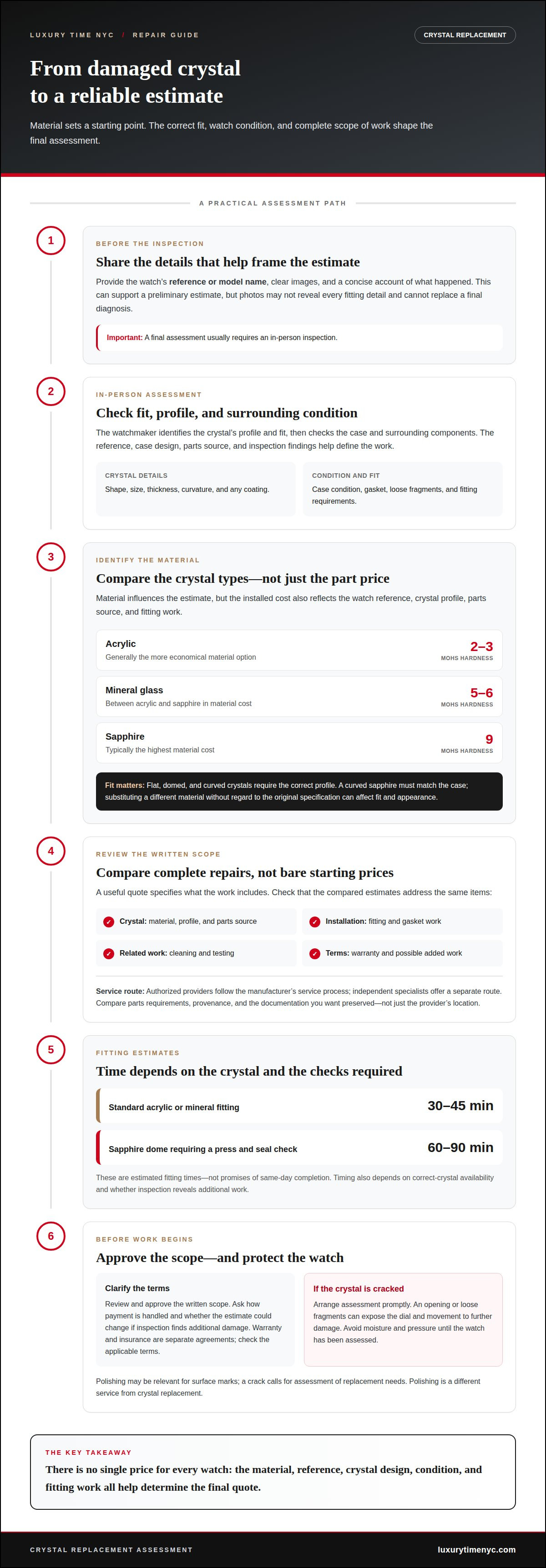
A preliminary estimate can use the watch’s make, model, crystal material, and visible damage. A final diagnosis usually requires an in-person inspection: the watchmaker needs to identify the crystal’s profile and fit, and check for damage to surrounding components. A photo can help describe the issue, but it may not show every fitting detail.
Free estimates and same-day crystal replacement aren’t universal NYC services. Timing depends on whether the correct crystal is available and whether the inspection reveals additional work. A standard acrylic or mineral crystal fitting takes a professional watchmaker an estimated 30-45 minutes; a sapphire dome requiring a press and seal check may take 60-90 minutes. Those are fitting estimates, not promises of same-day completion.
Authorized and independent providers differ in their service approach, not simply their address. An authorized provider follows the manufacturer’s service process, while an independent specialist may offer a separate route. Compare written quotes by checking whether they specify the crystal material, fitting work, additional checks, and warranty terms. In Midtown Manhattan, use the same criteria rather than assuming nearby providers offer identical service.
A watch warranty or insurance policy covers replacement only when its terms include the cause of damage. A warranty and an insurance policy are separate agreements, so review the applicable terms before approving a repair. Depending on the agreement, impact damage to a cracked crystal may be treated differently from a covered defect.
For a useful estimate, provide the reference or model name, clear images, and a concise account of what happened. Review and approve the written scope before work begins. Ask how payment is handled and whether the estimate could change if inspection reveals additional damage. Replace a visibly cracked crystal promptly: an opening or loose fragments can expose the dial and movement to further damage. Avoid moisture and pressure until the watch has been assessed.
Crystal replacement price ranges by material
How much does watch crystal replacement cost in NYC? There’s no single price for every timepiece. The estimate depends on whether the crystal is acrylic, mineral glass, or sapphire, as well as the work needed to fit it. A standard profile differs from a shaped or domed crystal that must match a specific case. The watch reference, parts source, and inspection findings all help define the scope.
Material is only the starting point. A vintage watch may need a less common profile, while a modern model may require a specific crystal and precise fit. Curvature, thickness, coatings, and case condition can all affect the work. The watchmaker may also assess the gasket, clean away fragments or debris, and test the watch after installation. The quote should cover the complete job, not just the replacement part.
Brand-specific estimates depend on the exact model, not just the name on the dial. A Rolex and a Patek Philippe may require different crystals, parts sourcing, and fitting procedures. Even within one brand, the reference and case design affect the parts and labor. Compare quotes by checking that each specifies the material, parts source, fitting, gasket work, cleaning, testing, and warranty terms. An estimate that leaves out these details may describe a different repair.
A crystal replacement starting price or polishing starting price should be understood in context. The first depends on the crystal and installation requirements; polishing is a different service and may suit surface marks rather than a cracked crystal. If the damage is a scratch, watch polishing may be relevant; a crack calls for assessment of replacement needs. Approve the written scope before work begins, including any testing or additional repair identified during inspection. That makes the estimate easier to compare and the decision more informed.
There’s no single set price in NYC: the cost depends on the crystal material, the watch’s reference and design, and the fitting and related work required.
Acrylic, mineral glass, and sapphire crystal costs
The material is an important part of a replacement estimate, but the installed cost also reflects fit and labor. Acrylic is generally the more economical option, mineral glass falls between acrylic and sapphire, and sapphire typically has the highest material cost. The exact amount depends on the reference, crystal profile, and parts source. Comparing materials is useful, but it won’t determine the price for every model.
Acrylic has a Mohs hardness of 2 to 3, while mineral glass measures 5 to 6. Sapphire measures 9 on the Mohs scale. These figures describe relative scratch resistance, not the full cost of replacement. Acrylic can suit a watch designed for a flexible crystal; substituting another material without regard to the original specification can affect fit and appearance.
Mineral glass offers a middle ground in material cost and hardness. Its exact profile still matters: flat and domed crystals require different parts and fitting. Sapphire’s greater hardness doesn’t make every sapphire replacement the same. Size, curvature, and any anti-reflective coating affect the part and installation. For example, a curved sapphire crystal needs to match the case more closely than a standard flat profile.
Fitting a crystal on a mechanical timepiece requires care. A watchmaker must contain loose pieces, protect the dial and movement, and seat the replacement without disturbing nearby components. If fragments have entered the case, cleaning may add work beyond replacing the crystal. A thorough assessment also considers the gasket and case opening, since correct seating affects the finished repair.
To understand a quote, compare the specified material and profile, then review what installation includes. Ask whether the crystal matches the original specification and whether fitting, cleaning, gasket work, and testing are included. A vintage watch may need a less common profile, making the parts source as important as the material.
DIY versus professional replacement
A crystal replacement involves more than removing damaged material. The watchmaker identifies the correct crystal, protects the dial and movement, fits the part, and checks its seating. With a standard acrylic or mineral crystal, fitting takes an estimated 30-45 minutes. A sapphire dome requiring a press and seal check may take 60-90 minutes. These estimates describe fitting time, not the full service timeline.
DIY work can introduce risks that are hard to assess from the outside. Loose fragments may mark the dial or enter the case, and an incorrect crystal may sit unevenly or fail to match the original finish. During installation, a professional can assess the case and gasket, then perform a seal check where appropriate. On a valuable mechanical watch, don’t treat the crystal as an isolated component.
Part choice matters. An original-equipment crystal, professional installation, and detailed service records help preserve a luxury watch’s long-term value. Replacing a luxury watch crystal can reduce investment value by 15% to 40%, particularly when aftermarket parts are used or service documentation is missing. That range is not a prediction for every watch; it underscores why collectors should decide on parts and documentation before authorizing work.
Before approving professional service, review the written scope: crystal type, installation, cleaning, and any testing. Ask how the watchmaker documents the work and what warranty applies to the crystal and workmanship. A reputable repair service should provide at least a 12-month warranty. After installation, retain the service record with the watch’s provenance and prior maintenance documents. This record helps establish what was replaced and when.
For a valuable timepiece, arrange a professional watch assessment before deciding between repair options.
Luxury Time NYC
Luxury Time NYC offers watch authentication for collectors assessing a valuable timepiece, including questions about provenance and originality after previous service. This can help when a crystal replacement raises broader concerns about authenticity or documented history. The company also offers Rolex, Patek Philippe, Audemars Piguet, and Richard Mille watches.
For a crystal estimate, the key details are the watch’s reference, crystal specification, and inspection findings. Keep any service records with the timepiece, as they can help establish its history. If authenticity is the concern, a professional review can address that separately without assuming the crystal itself is original.
Contact Luxury Time NYC to discuss watch authentication or your timepiece.
Make the next decision with confidence
The right next step is a documented assessment of the whole watch, not just the visible damage. Before authorizing work, keep the estimate and service record with the timepiece’s provenance. This provides a clear reference for future servicing and helps preserve the continuity collectors value.
Use your understanding of watch crystal replacement cost in NYC to frame the discussion, then let the watch’s reference and condition determine the final scope. A considered decision weighs authenticity, fit, and how prior work may affect the timepiece’s history.
For a professional assessment of your timepiece, contact Luxury Time NYC. A thoughtful next step can bring clarity to the repair decision and keep your watch’s care aligned with its heritage.
Frequently Asked Questions
How long will my repair take?
Turnaround depends on more than the time needed to fit a crystal. The watchmaker may need to source the correct part, inspect the case, and test the watch after installation. A less common profile or damage requiring extra work can extend the process. For a useful timeline, distinguish bench work from the full service, including parts sourcing, assessment, and final checks.
What is the average cost to replace a watch crystal by crystal type: acrylic, mineral, and sapphire?
There’s no single average price that covers every material and watch model. A quote reflects the crystal type, profile, parts source, and installation requirements. A shaped or coated crystal may involve different work from a standard flat one. Compare estimates by checking that they describe the same specification and included work, rather than comparing material names alone.
How much does luxury or Swiss watch crystal replacement cost in New York City?
Luxury and Swiss watches don’t share one replacement price. The reference determines the crystal specification, while its shape and parts source affect the work involved. Two watches from the same manufacturer, for example, may need different profiles. A useful estimate identifies the exact model and proposed part, then separates replacement work from any additional repairs found during assessment.
Which NYC watch repair shops replace watch crystals, and what are their prices?
Luxury Time NYC provides professional watch repair in New York, including crystal replacement. Pricing depends on the watch and work required, so a general shop price may not reflect your model. When reviewing a written estimate, look for the specified crystal, fitting scope, and any testing or additional work. This makes it easier to compare estimates on the same basis.
How long does watch crystal replacement take in NYC?
In NYC, the overall turnaround depends on parts sourcing, the watch’s condition, and the checks required after fitting. A water-resistance test adds an estimated 10-15 minutes to the replacement work. This is testing time, not a complete turnaround estimate. A rare crystal or related case issue can extend the schedule beyond the hands-on fitting itself.
What risks come with replacing a watch crystal, including water resistance or damage?
An incorrect fit or installation can compromise the seal, so don’t assume water resistance after replacement. A professional can assess the gasket and test the watch after fitting. Keep the watch away from water until testing is complete. The replacement part matters too: a crystal that doesn’t match the watch’s specifications may change its profile or appearance, even if it seems to fit.


