


When assessing vintage watch patina, what to look for is not just an appealing color, but how the dial, hands, luminous material, and case fit together. A warm dial or softly aged lume may reflect years of change; similar unevenness can also signal moisture, corrosion, or alteration.
Collectors often prize character, especially when it comes with original components and a well-preserved case. But color alone tells only part of the story. A careful assessment looks beyond the first impression to the relationship between each component and the watch’s documented history.
This guide explains how to distinguish appealing age from damage, spot details that warrant closer inspection, and assess whether components appear consistent with one another. Patina is a clue to a watch’s history, not proof of originality, condition, or value. By comparing patinated and cleaner examples against your own priorities, and considering authentication and condition separately from appearance, you can make a more informed decision about what you’re buying.
Key Takeaways
- Use consistent lighting and multiple angles to compare the dial, lume, hands, and case without assuming appearance alone explains their condition.
- Understand that vintage watch patina is a clue to a watch’s history, not proof of originality or value.
- Separate the visual character you appreciate from condition questions that need closer examination.
- Follow a measured buying checklist, distinguishing visible details from seller descriptions and documented service history.
- Consider authentication and professional repair expertise when evaluating a vintage luxury watch.
What Does Patina Mean on a Vintage Watch?
Patina is the visible change that develops on a watch’s materials through age and exposure. On a vintage watch, it may appear as a softened dial tone, aged luminous material, or a change in the finish of the case or bracelet. The word describes appearance, not a verdict. Patina alone cannot establish whether a component is original, whether the watch is in sound condition, or what it’s worth.
An attractive aged surface and a condition concern can look similar in a photograph. Subtle, broadly even changes may be consistent with age, while isolated stains, pitting, flaking, or corrosion call for closer assessment. Moisture evidence warrants particular attention, but appearance alone cannot establish its cause or whether it has affected the movement. There is no universal visual test that distinguishes natural aging from damage across every watch and material.
Collectors researching vintage watch patina what to look for should treat the visible surface as a starting point. The watch’s reference, materials, exposure, and documented history all inform an assessment. A dial that has changed color may be appealing, but that appearance does not confirm that the dial is original or untouched. For a general account of what patina is across different materials, Wikipedia offers a useful foundation; a watch still requires its own examination.
Which parts of a vintage watch can develop visible aging?
Inspect the dial, luminous material, hands, case finish, and bracelet separately. A dial may shift in tone, while lume can darken or change texture. Hands and case finishes respond to their own materials and exposure; a bracelet may show wear where it meets the wrist or clasp. These components need not age identically. Matching color is neither required nor proof of originality.
Consider each feature in relation to the watch as a whole. The dial and hands, for example, may have different shades without that difference proving either a mismatch or a problem. Record what you can see instead of inferring a cause from color alone. A component-by-component review makes inconsistencies easier to describe and questions easier to investigate.
Is patina the same as damage or restoration?
No. Discoloration may be cosmetic, while corrosion, deteriorating lume, or material loss may call for a closer condition assessment. Restoration is a separate question: refinishing, replaced hands, or a substituted dial can change a watch’s appearance and originality, even if the result looks pleasing. Natural aging and later intervention can also coexist on the same watch.
Photographs are useful for an initial review, but lighting, angle, and image quality can disguise surface texture or alter how color appears. A close inspection and any available service or component history provide further context. Treat the seller’s description as a claim to assess against visible details and documentation, not as a diagnosis.
How to Inspect Patina on a Vintage Watch: Dial, Lume, Hands, and Case
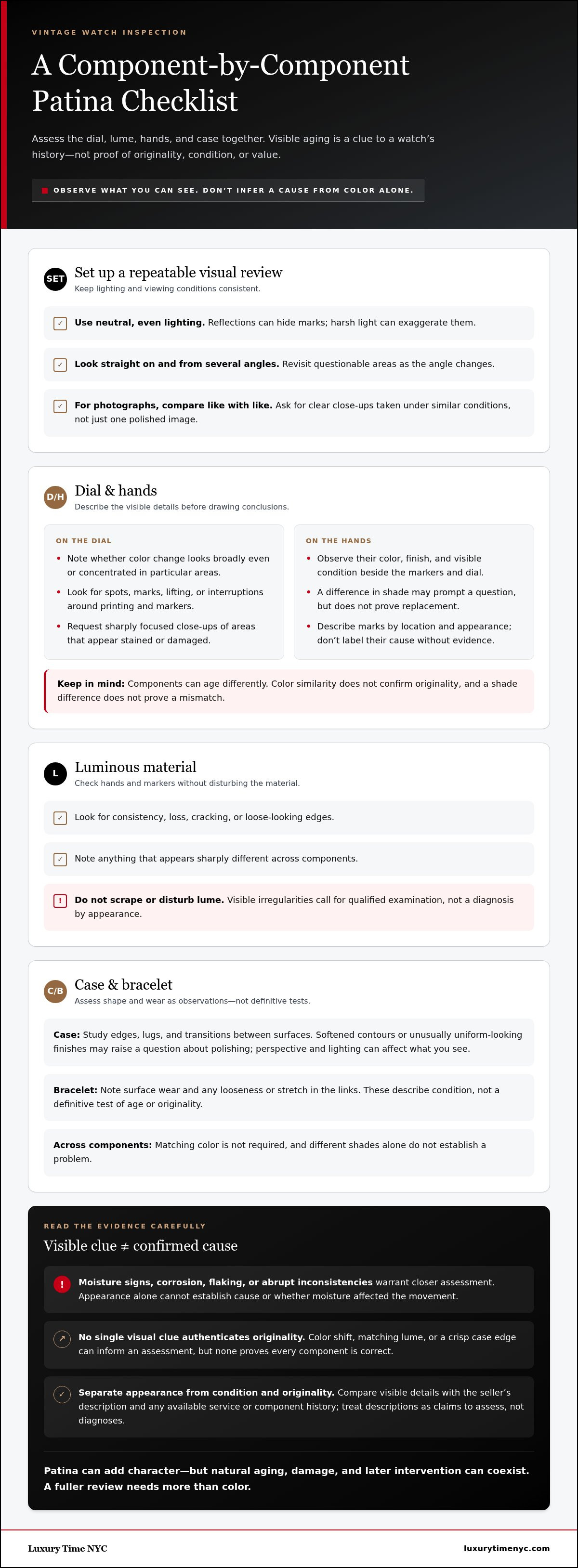
Start with a calm, repeatable visual review. Use neutral, even lighting, then examine the watch straight on and from several angles. Reflections can hide surface marks, while harsh light can exaggerate them. For photographs, compare images taken under similar conditions and ask for clear close-ups rather than relying on one polished image.
No single visual clue can authenticate a watch’s originality. A color shift, matching lume, or crisp case edge may inform your assessment, but none proves that every component is correct to the watch. Record what you can see and leave conclusions about cause and authenticity to a fuller review.
What should you look for on the dial and hands?
On the dial, note whether color changes appear broadly even or concentrated in particular areas. Look for spots, marks, lifting, or interruptions to the surface around the printing and markers. Localized marks merit attention, but a photograph alone cannot identify their cause. Ask for close, sharply focused images of the dial, especially any area that appears stained or damaged.
Then compare the hands with the dial. Observe their color, finish, and visible condition beside the markers and surrounding surface. A difference in shade may prompt a question, but it does not prove the hands were replaced; components can age differently. Review multiple angles and do not treat color similarity as confirmation of originality. Describe a mark by its location and appearance rather than labeling it moisture or restoration without evidence.
How should you assess lume, case, and bracelet aging?
Examine luminous material on the hands and markers for consistency, loss, cracking, or loose-looking edges. Note anything that appears deteriorated or sharply different across components. Do not scrape or disturb the material. Visible irregularities are reasons for a qualified examination, not a diagnosis based on appearance.
For the case, study the edges, lugs, and transitions between surfaces. Softened contours or finishes that appear unusually uniform may raise a question about polishing, though perspective and lighting can affect what you see. Look at wear in relation to the case’s original shape rather than assuming every mark has the same significance. On a bracelet, note surface wear and any looseness or stretch in the links. These describe condition, not a definitive test of age or originality.
If you’re reviewing a watch in person, revisit questionable areas under consistent light and note what changes as the angle shifts. For photographs, request straight-on and oblique views of the dial, hands, case edges, and bracelet. Moisture signs, corrosion, flaking, or abrupt inconsistencies deserve closer professional assessment. Luxury Time NYC provides watch authentication and condition assessment to help put those observations in context.
Does Vintage Watch Patina Add Character, or Signal a Condition Concern?
Patina can give a vintage watch a distinctive visual presence. Whether that appearance feels compelling or distracting is a matter of preference; condition, originality, and mechanical performance require separate consideration. One collector may prefer an even, softly aged dial, while another may choose a cleaner example. Neither preference establishes whether the watch is authentic or in sound working order.
Use this comparison to guide your questions, not to diagnose the watch from appearance alone:
- Visual character: Subtle, coherent changes may contribute to an individual look. Condition question: Are there localized stains, corrosion, cracking, or loose material that need closer assessment?
- Originality evidence: Components and documented history can help establish what is original. Condition question: Are replacements, refinishing, or other interventions recorded or apparent?
- Buyer preference: Decide whether you prefer visible age or a cleaner presentation. Condition question: Is that preference leading you to overlook service needs or physical deterioration?
- Overall assessment: Compare the complete watch, not one striking feature. Condition question: Have its mechanical condition and authenticity been assessed separately from its appearance?
Patina can inform a conversation, but it cannot settle a watch’s history. A visually attractive dial does not establish that it’s original, and an aged appearance does not reveal whether the movement needs service. Keep aesthetic judgment separate from mechanical evaluation and authentication.
When might patina appeal to a collector?
Natural-looking age may give a dial or case a character that a cleaner example lacks. The appeal depends on the collector, the specific watch, and its overall condition, not simply on how pronounced the aging appears. Compare examples side by side and ask which one you would genuinely enjoy owning if neither were described as more valuable or desirable.
When should visible aging prompt extra caution?
Corrosion, possible moisture evidence, flaking, loose material, or unexplained differences between components deserve closer assessment. They do not establish a cause on their own, but they can raise questions that photographs or a seller’s description cannot resolve. Aggressive cleaning or refinishing may also alter surfaces and change the watch’s original appearance, so a polished presentation is not necessarily evidence of better preservation.
Use vintage watch patina what to look for to structure your observations, not to assign value based on color. Note what you can see, review available service records, and separate documented facts from assumptions. A collector who values patina can still prioritize originality and sound condition; someone who prefers a cleaner watch should make the same distinctions. The right choice is the example whose appearance and verified condition align with your priorities.
A Buyer’s Checklist for Evaluating Vintage Watch Patina
A disciplined review separates what attracts you from what the watch’s condition and history can support. Follow these steps to move from preference to evidence. Keep seller descriptions, your own observations, and documented facts distinct.
- Clarify your preference. Decide whether you’re drawn to visible age, a cleaner appearance, or a balance between the two. This makes it easier to compare examples on their merits rather than be guided by the word “patina.”
- Review the images. Look for clear, well-lit views of the dial, hands, case, and bracelet. Compare angles and note areas that are obscured, unusually reflective, or shown only at a distance. Record observations without assigning a cause.
- Inspect the components. Consider each surface separately, then assess how the details fit together. Note spots, flaking, apparent corrosion, softened case contours, or differences that need explanation. A variation in color is an observation, not proof of a replaced part.
- Request documentation. Ask what is known about previous servicing, replacement components, refinishing, and ownership history. Request relevant records and distinguish documented details from verbal descriptions. An incomplete history is uncertainty to weigh, not automatic evidence of a defect.
- Assess independently. Consider authenticity, movement condition, service needs, and completeness separately from the dial’s appearance. If originality or condition remains uncertain, professional authentication and condition assessment can address questions that images and descriptions cannot settle.
What questions help clarify a watch’s condition history?
Ask which components, if any, have been replaced, whether the case has been refinished, and what service records accompany the watch. Request close, well-lit images of the dial, hands, case edges, and bracelet, especially where a mark or inconsistency is visible. For service-related context, this luxury watch repair guide can help explain why a watch’s maintenance history matters. If the seller doesn’t know an answer, record it as unknown rather than treating it as reassurance or proof of a problem.
How can a buyer assess the watch beyond its appearance?
Patina says nothing conclusive about how the movement runs, whether service is due, or whether the watch is authentic. A qualified inspection can assess details unavailable in photographs, while records may add context to the visible condition. For broader purchase due diligence on a Rolex, consult this guide to buying a Rolex in NYC.
If you’re considering a vintage luxury watch, explore watch authentication and professional repair as part of a considered evaluation. The objective is to understand what is visible, what is documented, and what still needs expert assessment before you decide.
Where to Go Next When Considering a Patinated Vintage Watch
A considered decision rests on three things: whether the appearance appeals to you, whether the watch’s condition is understood, and what evidence supports its originality and history. Patina can enrich a watch’s visual character, but it is not a shortcut to value or a substitute for examining the complete piece. Keep aesthetic preference, mechanical condition, and authenticity in view as separate questions.
What a professional watch assessment can clarify
Authentication can help evaluate a watch beyond the visible dial and case, bringing its components and available information into a broader assessment. Professional repair expertise can also help clarify condition and potential service needs that photographs cannot show. Neither provides a complete account of every past event: records and inspection can offer useful evidence without settling a watch’s full history.
This distinction matters when an attractive surface has drawn your attention. A dial’s appearance cannot confirm how the movement is functioning, just as a polished case cannot establish its service history. Treat an assessment as a way to understand the watch more fully, including where evidence is clear and where uncertainty remains. For wider transaction considerations, the guide to buying and selling luxury watches offers broader context.
Choose a watch for the complete picture
Before committing, weigh the appearance you prefer alongside originality, overall condition, documented history, and how you intend to own the watch. A collector seeking an expressive, visibly aged dial may reach a different conclusion from someone who values a cleaner presentation. Both can make sound choices when the decision reflects the watch itself rather than assumptions that age automatically means authenticity, rarity, or greater worth.
Return to vintage watch patina what to look for with a broader perspective: the surface is one part of the evidence. Consider whether available documentation supports the seller’s account, whether the visible condition raises unanswered questions, and whether the watch’s service needs suit your plans. If important details remain unclear, pause for further assessment rather than letting an appealing patina make the decision for you.
Collectors considering a luxury watch can explore Luxury Time NYC’s authenticated selection online or arrange a visit to its New York showroom by appointment. Explore authenticated luxury watches with appearance, condition, and provenance in view.
Make Your Next Vintage Watch Decision with Confidence
The right vintage watch is not necessarily the one with the most striking dial. It’s the one whose appearance, condition, and history make sense for how you intend to own it. Before committing, decide which uncertainties you’re comfortable carrying and which need a clearer answer. That perspective keeps character in view without letting it eclipse the complete watch.
In practice, vintage watch patina what to look for means observing carefully, seeking evidence, and letting personal preference follow an informed assessment. Professional authentication and repair expertise can support that process. Watches purchased through Luxury Time NYC include a certified authenticity guarantee, and showroom visits in New York’s Diamond District are available by appointment.
Take the next step at your own pace. Explore authenticated luxury watches at Luxury Time NYC and find an example whose character and condition feel right for your collection.
Frequently Asked Questions
Does patina prove that a vintage watch is original?
No. An aged appearance can develop on original parts, but it can also appear on a watch with replacement components or later alterations. A dial, for example, may look convincingly old while the hands have been changed. Assess originality by considering the watch’s components and available records together, with authentication where needed. Treat patina as one detail, not proof of provenance.
Can vintage watch patina be removed or reversed?
Not reliably without changing the material or its appearance. Cleaning may remove surface dirt, but attempts to strip discoloration or restore a dial’s former color can damage printing, finish, or luminous material. Case polishing is a separate intervention that removes metal and can soften original contours. Before any treatment, establish what the component is made of and what the work would alter. Avoid home remedies on a collectible watch.
Is uneven discoloration on a vintage watch dial always damage?
No. Uneven color alone cannot establish whether a dial is damaged; it may reflect different exposure or another change to the surface. Look for whether marks appear raised, pitted, spreading, or concentrated around printing and markers, but do not treat those observations as a diagnosis. For vintage watch patina what to look for, note the exact areas of concern and seek a closer assessment if the surface appears compromised.
Should the lume on vintage watch hands and dial match?
Not necessarily. Luminous material on the hands and dial can age differently because the components may have had different exposure or histories. A color mismatch may prompt questions about service or replacement, but it proves neither. The watch’s reference, component details, and any service documentation provide context. Do not scrape, wet, or otherwise test lume yourself; a visual comparison is not an authenticity test.
Can photographs show whether a vintage watch has genuine patina?
Photographs can reveal visible details, but they cannot conclusively establish whether aging is natural, altered, or associated with damage. White balance, reflections, image processing, and shallow focus can change how color and texture appear. Ask for unfiltered close-ups in neutral light, including angled views of the dial surface. If the decision depends on a subtle mark or texture, an in-person assessment is more informative.
Does patina increase a vintage watch’s value?
Not automatically. Some collectors may prize a particular aged appearance, while others prefer a cleaner dial. Value also depends on the specific watch, its originality, overall condition, documented history, and buyer demand. An attractive surface cannot offset corrosion, missing information, or mechanical concerns by itself. Compare similar examples by considering their complete condition, rather than assuming a distinctive color change commands a premium.
What should I ask before buying a vintage watch with patina?
Ask what is known about servicing, replaced parts, polishing, and any history of moisture or repair. Request available records and clear views of areas that concern you. Also ask whether the watch’s function and authenticity have been assessed, and what is included in the sale. Separate answers supported by documentation from details based only on recollection. Unanswered questions do not prove a defect, but they should inform your decision.


